
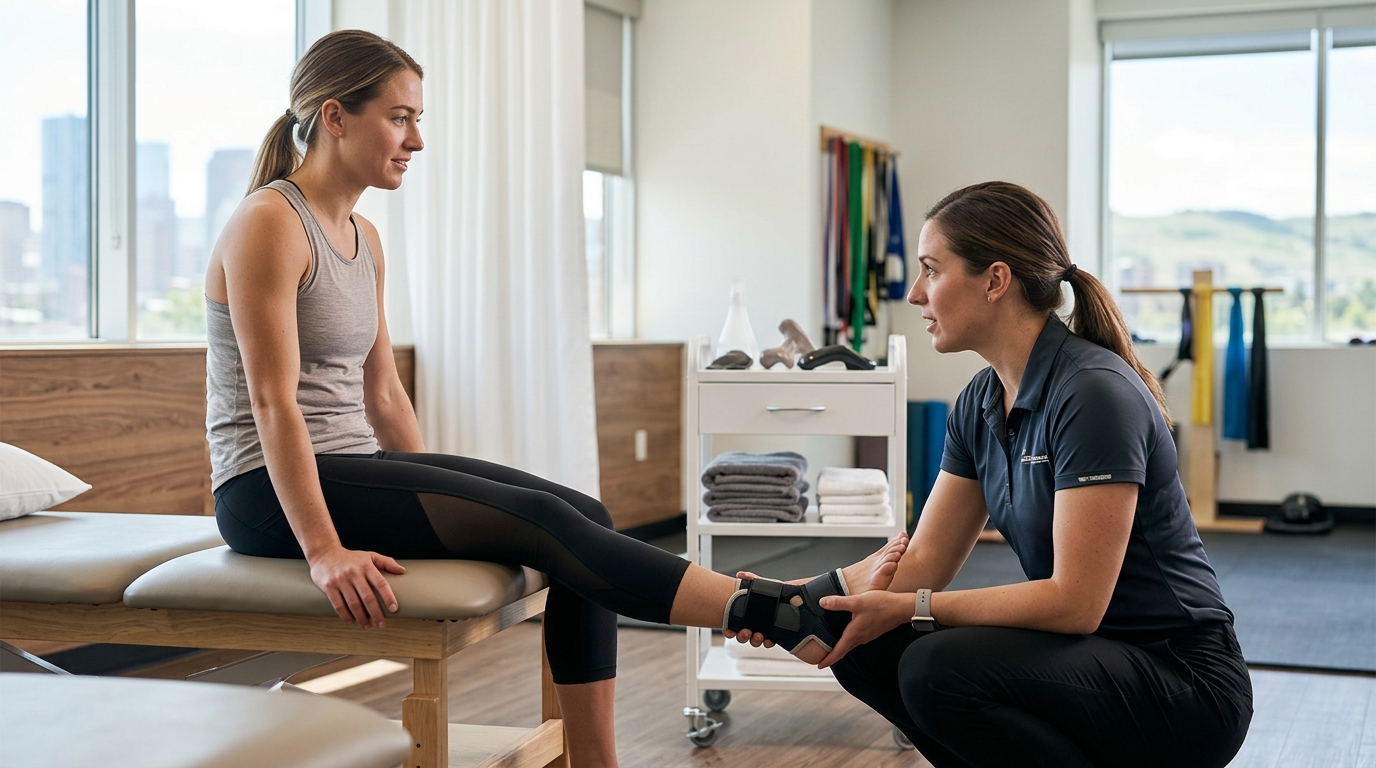
Whether you twisted an ankle on a Saturday trail run in Fish Creek Park or strained your shoulder during a midweek hockey game, one question dominates your recovery: what is the best treatment for sports injuries in Calgary? The honest answer is that no single modality works for every injury. The best outcomes come from a multi-disciplinary, evidence-informed approach that matches specific treatments to each athlete's diagnosis, goals, and timeline.
This ultimate guide breaks down every mainstream sports-injury treatment available in Calgary, explains when each one is most effective, and shows you how to choose the right clinic so you can return to peak performance as quickly and safely as possible.
Why Sports Injuries Require More Than Rest and Ice
The old advice of "just rest it" fails most active Calgarians for a simple reason: rest addresses symptoms but ignores the biomechanical cause. A rolled ankle may heal on its own, yet without corrective rehab, the surrounding ligaments often remain weak and vulnerable to re-injury.
Modern sports therapy therefore focuses on three pillars:
- Pain and inflammation control — reducing acute symptoms so the body can begin repair.
- Functional restoration — rebuilding strength, flexibility, and coordination.
- Injury prevention — correcting movement patterns and muscle imbalances to stop the cycle from repeating.
Clinics that address all three pillars under one roof tend to produce the fastest, longest-lasting results.
Core Treatment Modalities for Sports Injuries in Calgary
1. Chiropractic Care
Chiropractic care is one of the most widely used treatments for sports injuries across Calgary and beyond. It centres on the musculoskeletal and nervous systems, using hands-on techniques to restore alignment and improve function.
What it involves: Spinal and extremity joint adjustments, soft tissue therapy, and therapeutic exercise prescriptions. Chiropractors may also use techniques such as joint mobilization and soft tissue release to restore function and improve biomechanics.
Best for: Back and neck pain, sprains and strains, joint misalignment, and repetitive-use injuries such as tennis elbow or runner's knee. Research published in PMC confirms that chiropractic interventions like spinal manipulation and soft tissue therapies are effective in treating sports-related muscle strains and joint sprains.
Calgary advantage: Many Calgary chiropractic clinics combine adjustments with complementary therapies. For instance, at Complete Chiropractic & Sports Therapy (CCST) in NW Calgary, every treatment session uses a unique one-on-one, multi-technique approach designed to deliver results in as few visits as possible.
2. Physiotherapy
Physiotherapy is arguably the broadest sports-injury discipline. Licensed physiotherapists assess movement, design individualized rehab programs, and apply hands-on manual therapy to accelerate healing.
What it involves: Manual therapy, guided exercise programs, stretches, and modalities such as ultrasound or electrical stimulation. Treatment plans typically focus on improving balance, mobility, strength, and overall function while reducing pain.
Best for: Post-surgical rehabilitation, ACL and rotator cuff injuries, chronic overuse conditions, and return-to-sport programming. In Alberta, you do not need a doctor's referral to see a physiotherapist, making it an accessible first step after any sport or exercise injury.
3. Registered Massage Therapy
Sports massage goes well beyond relaxation. Registered Massage Therapists (RMTs) target muscle tension, adhesions, and scar tissue that develop after an injury or through accumulated training stress.
What it involves: Deep tissue work, trigger point release, myofascial techniques, and circulatory-focused strokes. Massage therapy can reduce muscle tension, decrease pain, and improve recovery timelines.
Best for: Muscle strains, chronic tightness, and complementary recovery alongside chiropractic or physiotherapy sessions.
4. Active Release Technique (ART®)
ART® is a patented, movement-based soft tissue treatment that targets muscles, tendons, ligaments, fascia, and nerves. The practitioner applies precise tension while the patient moves through specific motions, breaking up adhesions and restoring full range of movement.
Best for: Overuse injuries, repetitive strain conditions, and post-injury scar tissue that limits mobility. CCST Calgary offers ART® as one of its core service modalities.
5. Shockwave Therapy
Extracorporeal shockwave therapy (ESWT) sends acoustic pressure waves into damaged tissue, stimulating blood flow and cellular repair. It is an advanced treatment commonly used for tendon injuries, plantar fasciitis, and stubborn musculoskeletal conditions that have not responded to other interventions.
Best for: Plantar fasciitis, Achilles tendinopathy, calcific shoulder tendinitis, and chronic tendon injuries.
6. IMS / Dry Needling
Intramuscular Stimulation (IMS) inserts fine acupuncture-type needles into tight muscle bands (trigger points) to release deep-seated tension and restore normal muscle function. It is especially effective for neuropathic pain where nerve irritation keeps muscles chronically shortened.
Best for: Persistent muscle tightness, chronic pain conditions, and injuries where standard manual therapy has plateaued.
7. Osteopathy
Manual osteopathy takes a whole-body perspective, using gentle manipulation, stretching, and mobilization to improve structural balance. It is particularly helpful for athletes who have compensatory movement patterns — e.g., a hip injury that has shifted load onto the lower back.
8. Acupuncture
Traditional or medical acupuncture can complement other sports therapies by modulating pain signals, reducing inflammation, and promoting circulation. It is commonly used alongside chiropractic or physiotherapy for both acute and chronic sports injuries.
9. Graston Technique & Cupping
Instrument-assisted soft tissue mobilization (such as Graston Technique) uses stainless steel instruments to break down fascial restrictions, while cupping applies suction to increase blood flow and loosen tight tissues. Both are effective adjuncts for soft tissue injuries and recovery acceleration.
10. Kinesio / Sports Taping
Athletic therapists and chiropractors use specialized taping to support injured joints, reduce swelling, and provide proprioceptive feedback during activity. Taping is particularly valuable during the return-to-play phase when an athlete needs partial support without full bracing.
How to Choose the Right Sports Injury Clinic in Calgary
With dozens of clinics across the city, narrowing your options can feel overwhelming. Use the following criteria to evaluate any potential provider:
| Criterion | What to Look For |
|---|---|
| Multi-disciplinary team | Chiropractors, physiotherapists, RMTs, and specialists working under one roof so your care is coordinated. |
| Evidence-informed approach | Practitioners who stay current with research and use validated assessment tools. |
| One-on-one treatment time | Clinics that dedicate full appointment time to hands-on care rather than rotating between multiple patients. |
| Range of techniques | Access to ART®, shockwave, IMS, Graston, and other advanced modalities — not just basic adjustments or exercises. |
| Convenience | Evening and weekend hours, online booking, direct insurance billing, and accessible parking or transit. |
| Patient reviews | Consistent five-star reviews mentioning tangible outcomes, not just friendly service. |
Why CCST Calgary Checks Every Box
Complete Chiropractic & Sports Therapy (CCST) in NW Calgary was purpose-built around these principles. The clinic employs a team-based approach across chiropractic, physiotherapy, registered massage therapy, osteopathy, and acupuncture — all under one roof at 2624 Parkdale Blvd NW.
Key advantages include:
- Multi-technique sessions: Every appointment blends multiple modalities tailored to the individual, meaning a single visit might include adjustment, ART®, IMS, and rehab exercises.
- Results-focused philosophy: CCST's stated goal is to resolve issues in as few treatments as possible, avoiding unnecessary visit volume.
- Full service menu: Chiropractic, physiotherapy, massage, osteopathy, acupuncture, shockwave, IMS/dry needling, ART®, Graston Technique, cupping, kinesio taping, and concussion management.
- Convenient access: Extended hours Monday–Friday 8:30 am – 7 pm and Saturday 9 am – 2 pm, 24/7 online booking, direct insurance billing, and free parking.
- Proven track record: Over 190 five-star Google reviews from athletes and active individuals across Calgary.
Common Calgary Sports Injuries and Recommended Treatment Paths
The table below maps some of the most frequent sports injuries seen in Calgary to the treatment modalities most likely to help.
| Injury | Primary Treatment | Complementary Modalities |
|---|---|---|
| Ankle sprain | Chiropractic adjustment + physiotherapy rehab | Kinesio taping, massage |
| Runner's knee | Physiotherapy strengthening + biomechanical correction | Shockwave, ART® |
| Lower back strain | Chiropractic spinal manipulation + IMS | Massage, osteopathy |
| Rotator cuff injury | Physiotherapy + ART® | Acupuncture, cupping |
| Plantar fasciitis | Shockwave therapy | Graston Technique, chiropractic foot adjustment |
| Tennis / golfer's elbow | Chiropractic + ART® | IMS, massage |
| Hamstring strain | Physiotherapy + massage | Dry needling, kinesio taping |
| Concussion (sport-related) | Concussion management protocol | Chiropractic cervical care, acupuncture |
What to Expect During Your First Visit
If you have never been to a sports therapy clinic before, here is a typical first-appointment timeline at a multi-disciplinary practice like CCST:
- Health history intake (5–10 min): You complete forms covering your injury, activity level, medical history, and goals.
- Assessment and diagnosis (15–20 min): The practitioner conducts a thorough physical examination — testing range of motion, strength, and special orthopaedic tests relevant to your complaint.
- Treatment (20–30 min): Based on findings, treatment begins immediately. This may combine hands-on manual therapy, soft tissue work, and modalities like IMS or shockwave.
- Rehabilitation prescription: You receive specific home exercises, activity modifications, and a projected recovery timeline.
- Follow-up plan: A recommended treatment schedule — often tapering from twice weekly to once weekly as you improve.
Key Takeaways
- There is no single "best" treatment — the ideal approach combines multiple evidence-informed modalities matched to your specific injury and goals.
- Multi-disciplinary clinics that house chiropractic, physiotherapy, massage, and advanced therapies under one roof produce the most efficient recoveries.
- In Alberta, you can self-refer for both physiotherapy and chiropractic care — no doctor's referral required.
- Advanced modalities like shockwave therapy, IMS/dry needling, and ART® are particularly effective for stubborn or chronic sports injuries.
- CCST Calgary offers all major sports-injury treatments with a results-focused, multi-technique philosophy designed to minimize total visits.
Frequently Asked Questions
Do I need a referral to see a sports chiropractor or physiotherapist in Calgary?
No. In Alberta, both chiropractic care and physiotherapy are available on a self-referral basis. You can book directly without seeing your family doctor first, though a referral may be needed for certain insurance or WCB claims.
How long does it take to recover from a sports injury with treatment?
Recovery timelines vary significantly. Minor soft-tissue injuries like a mild ankle sprain may resolve in two to four weeks with consistent treatment, while more severe injuries such as a torn ACL can require several months of rehabilitation. Your practitioner will provide an estimated timeline based on your specific diagnosis and commitment to the treatment plan.
Is chiropractic care safe for sports injuries?
Yes. Chiropractic care is a well-established, non-invasive treatment for musculoskeletal conditions. It avoids surgery and prescription medications, and professional sports leagues worldwide — including 100 percent of NFL and MLB teams — employ chiropractors on staff to treat athletes.
What is the difference between physiotherapy and chiropractic for a sports injury?
Physiotherapy tends to emphasize exercise-based rehabilitation and functional movement retraining, while chiropractic focuses more on joint alignment, spinal manipulation, and nervous system function. In practice, the two disciplines are highly complementary, which is why multi-disciplinary clinics combine both for optimal outcomes.
Does CCST Calgary direct bill insurance for sports injury treatment?
Yes. CCST direct bills almost every major insurance company, which can reduce or eliminate out-of-pocket expenses. The clinic also offers 24/7 online booking, extended evening and weekend hours, and free on-site parking.
What should I bring to my first sports injury appointment?
Bring your Alberta Health Care card, any extended health insurance information, and comfortable clothing that allows the practitioner to examine the injured area. If you have previous imaging (X-rays, MRI), bring those results as well.