

If you have been dealing with bloating, constipation, acid reflux, or irritable bowel syndrome (IBS), you may not immediately think of osteopathy as a solution. However, growing research suggests that osteopathic manipulative treatment (OMT) can play a meaningful role in relieving digestive symptoms. Osteopathy is a gentle form of manual therapy that uses a holistic approach to address all systems of the body, including the digestive system. In this article, we explore how osteopathy works for gut health, what the science says, and how Calgary residents can access this care at Complete Chiropractic and Sports Therapy (CCST).
What Is Osteopathy?
Osteopathy is a hands-on, non-invasive form of therapy that focuses on aligning and optimizing the body's structure to support its function. It is based on the principle that the body has the innate ability to heal itself when its musculoskeletal, nervous, and circulatory systems are in balance.
At CCST, manual osteopathy addresses all layers of the body, from fascia and muscles to joints, the nervous system, and even the visceral field. Treatment may involve myofascial release, neuromuscular activation, gentle joint manipulation, and gentle visceral manipulations.
The Gut-Body Connection
Your digestive system does not operate in isolation. The diaphragm, spinal column, abdominal muscles, pelvis, and cranium all play a role in gut health. When any of these areas is restricted or imbalanced, digestive symptoms can follow.
The Role of the Vagus Nerve
The vagus nerve is the primary nerve supply of the entire digestive tract. It exits the base of the skull, travels down the neck, and into the chest and abdomen. Osteopathic practitioners release soft tissue and joint restrictions in the cranial base and upper neck, which is a common zone of compression for the vagus nerve. This helps restore the balance between your parasympathetic ("rest and digest") and sympathetic ("fight or flight") nervous systems.
Stress and Digestion
Chronic stress can disrupt peristalsis, cause sphincters to improperly open and close, affect stomach acid production, and alter gut bacteria balance. Osteopathy's focus on relaxation and nervous system balance can be particularly beneficial for individuals whose digestive problems are influenced by stress. If stress is also causing musculoskeletal tension, our multi-disciplinary team can help address both issues simultaneously.
Digestive Conditions Osteopathy Can Address
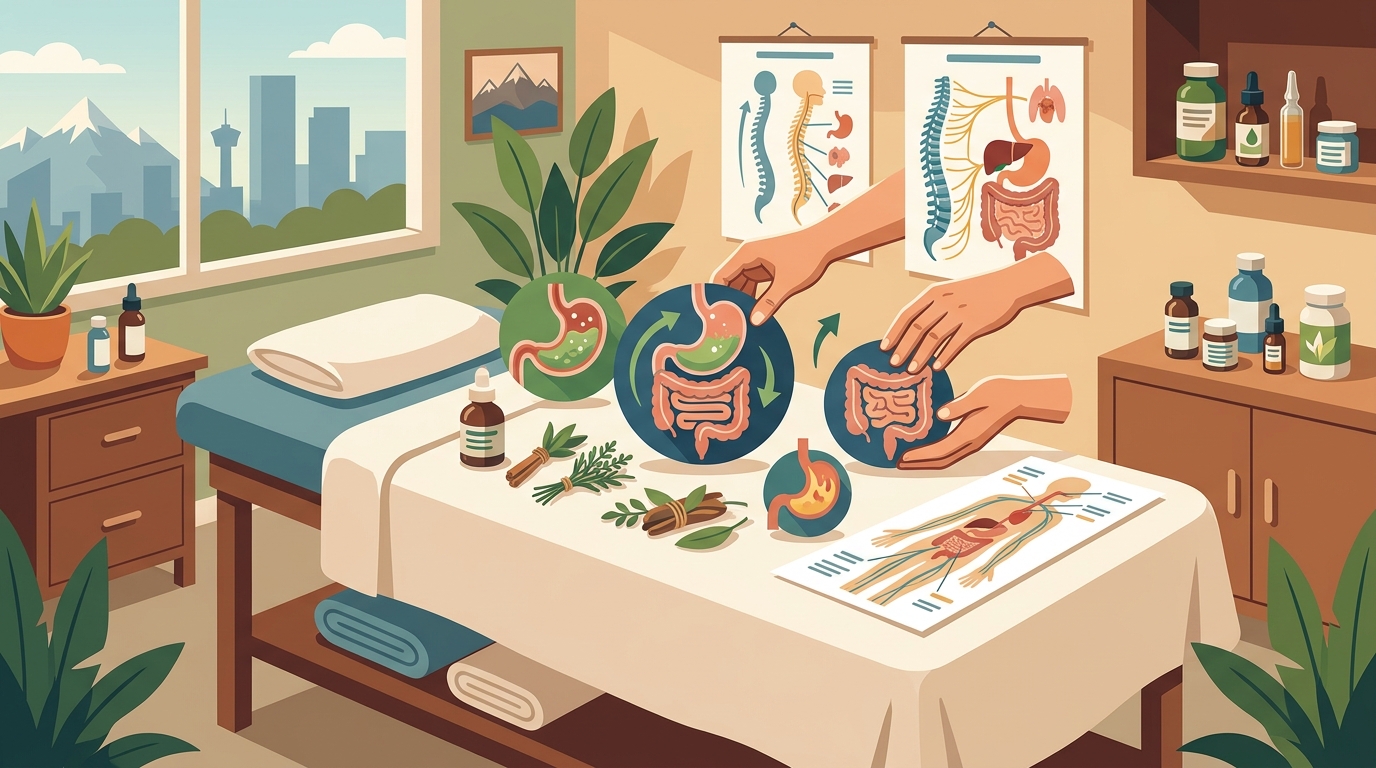
Visceral osteopathy is a branch of osteopathy that focuses on the manipulation and balancing of the internal organs. Common digestive conditions that may respond to osteopathic treatment include:
- Irritable bowel syndrome (IBS)
- Acid reflux and gastroesophageal reflux disease (GERD)
- Chronic constipation
- Bloating and flatulence
- Post-surgical digestive discomfort
- Functional dyspepsia (indigestion)
Visceral manipulation is a technique involving gentle hands-on movements of the internal organs to release tension, improve mobility, and enhance circulation. By restoring proper organ movement, your body can resume healthy digestive function.
What the Research Says
The evidence supporting osteopathy for digestive health continues to grow. A 2023 literature review published in Cureus evaluated five primary research studies and concluded that visceral OMT effectively reduces the symptoms of IBS and improves patients' quality of life.
A 2025 review in the International Journal of Osteopathic Medicine analyzed 12 studies involving 516 individuals and found that OMT and related treatments are effective interventions for improving symptoms of gastrointestinal distress like constipation and abdominal pain.
Additionally, multiple randomized controlled trials and systematic reviews show that OMT can reduce IBS and GERD symptoms, improve quality of life, and aid recovery after GI surgery, with a favorable safety profile.
| Condition | Evidence Level | Key Findings |
|---|---|---|
| IBS | Multiple RCTs | Reduced symptom severity and improved quality of life |
| GERD / Acid Reflux | RCTs and systematic reviews | Reduced symptoms through diaphragm and vagus nerve work |
| Constipation | RCTs (neurological populations) | Reduced constipation and laxative use |
| Post-surgical recovery | Emerging evidence | Improved GI function after abdominal surgery |
| Functional Dyspepsia | Limited but promising | Symptom improvement through visceral techniques |
What to Expect During a Session
During an osteopathy session for digestive issues at CCST, your practitioner will begin with a thorough assessment of your posture, movement patterns, and abdomen. At our clinic, Mack Gregoraschuk, who holds a Master in Practice of Osteopathic Manipulative Sciences from the Canadian Academy of Osteopathy, uses highly sensitive palpation skills to locate the root cause of dysfunction.
Treatment Approach
Treatment is gentle, often involving light pressure, stretching, and mobilization techniques. It begins by progressively unloading larger lines of tension and ensuring the body is globally realigned. As the course of treatment progresses, the practitioner dives deeper into more specific areas of restriction. Changes from treatment can be felt immediately or may take 3 to 5 days to integrate.
Complementary Care
The "Complete" style at CCST means your treatment can incorporate multiple techniques and approaches together. Depending on your needs, osteopathy can be complemented by chiropractic care, physiotherapy, massage therapy, or acupuncture, all under one roof with no hidden costs.
Osteopathy Compared to Other Digestive Approaches
| Approach | Method | Focus | Invasive? |
|---|---|---|---|
| Visceral Osteopathy | Gentle manual manipulation of organs and spine | Root cause: structural, nervous system, and organ mobility | No |
| Medication (antispasmodics, laxatives) | Pharmacological | Symptom management | No (oral) |
| Dietary Changes | Nutrition-based | Trigger avoidance and gut health | No |
| Surgery | Surgical intervention | Structural correction (e.g., hiatal hernia repair) | Yes |
Osteopathy is often used as a complementary therapy alongside conventional medical treatments. While it may not be a standalone solution for every digestive condition, it can provide meaningful support and contribute to a more comprehensive approach to healthcare.
Key Takeaways
- Osteopathy is a gentle, non-invasive therapy that can help address digestive issues by restoring organ mobility and nervous system balance.
- Research supports the use of visceral OMT for reducing IBS symptoms, constipation, and GERD.
- The vagus nerve plays a central role in digestive health, and osteopathic techniques can help release compression affecting it.
- Stress is a significant contributor to digestive dysfunction, and osteopathy can help calm the sympathetic nervous system.
- At CCST in Calgary NW, osteopathy is part of a multi-disciplinary, one-on-one treatment approach with no hidden costs.
- Results may be felt immediately or within 3 to 5 days after treatment.
- Osteopathy works best as a complementary therapy alongside medical care and good nutrition.
Frequently Asked Questions
What digestive conditions can osteopathy treat?
Osteopathy can help with IBS, acid reflux, GERD, constipation, bloating, flatulence, functional dyspepsia, and post-surgical digestive discomfort. It uses gentle visceral manipulation to restore organ mobility and improve nervous system function.
Is there scientific evidence that osteopathy helps digestion?
Yes. Multiple randomized controlled trials and systematic reviews have found that osteopathic manipulative treatment effectively reduces IBS and GERD symptoms and improves quality of life. A 2025 review analyzed 12 studies with 516 participants showing positive outcomes for gastrointestinal distress.
How does the vagus nerve relate to digestion?
The vagus nerve is the primary nerve supplying the digestive tract. It regulates the "rest and digest" response. Osteopaths work on the cranial base and upper neck to release compression on this nerve, helping restore healthy digestive function.
How many osteopathy sessions are needed for digestive issues?
Many patients notice improvements within a few sessions. Some research shows reduced symptom severity after just three sessions. The exact number depends on the individual condition and its underlying causes.
Is osteopathic treatment for digestion painful?
No. Osteopathic treatment is gentle and non-invasive, involving light pressure, stretching, and mobilization. Most people find the experience deeply relaxing.
Can osteopathy replace medication for digestive problems?
Osteopathy is typically used as a complementary therapy alongside conventional treatments. It should not replace medical advice or prescribed medication without consulting your doctor. However, some patients are able to reduce their reliance on laxatives and other medications over time.
Does CCST in Calgary offer osteopathy for digestive issues?
Yes. CCST offers manual osteopathy that addresses digestive issues among many other conditions. Their one-on-one approach ensures personalized care for each patient.
Do I need a referral to see an osteopath at CCST?
No referral is needed. You can book an appointment directly online or by calling the clinic.
Ready to Address Your Digestive Concerns?
If you are experiencing digestive discomfort and want to explore a natural, hands-on approach, osteopathy at CCST may be right for you. Our Calgary NW clinic provides personalized, one-on-one treatment with no hidden costs. Book your osteopathy appointment today or call us at 403-245-2686 to get started.