

If you have ever wondered how thin needles can relieve chronic or acute pain, you are not alone. Acupuncture is one of the most widely researched non-pharmacological therapies for pain, backed by decades of clinical trials and modern neuroscience. At Complete Chiropractic & Sports Therapy (CCST) in NW Calgary, acupuncture is integrated into a comprehensive, one-on-one treatment approach that combines multiple techniques to help patients recover faster with fewer visits. This guide explains exactly how acupuncture works, what the science says, which conditions respond best, and what to expect during treatment.
What Is Acupuncture?
Acupuncture is a therapeutic technique that involves the insertion of extremely thin needles through the skin at strategic points on the body. These points, called acupoints, lie along pathways known as meridians. Traditional Chinese Medicine (TCM) explains acupuncture as a method for balancing the flow of energy, or qi, believed to travel through these meridians.
Modern medical acupuncture builds on this foundation with contemporary neuroscience research that identifies specific biological mechanisms behind its pain-relieving effects. At CCST's acupuncture clinic, practitioners use both traditional and contemporary medical acupuncture approaches tailored to each patient's needs.
The Science Behind Acupuncture Pain Relief
Research published in PAIN Reports (2024) identifies three primary mechanisms of acupuncture analgesia: a local physiological response at the needling site, suppression of pain signaling at spinal and supraspinal levels, and the release of endogenous opioids and other biochemical mediators in both the peripheral and central nervous systems.
Endorphin and Neurotransmitter Release
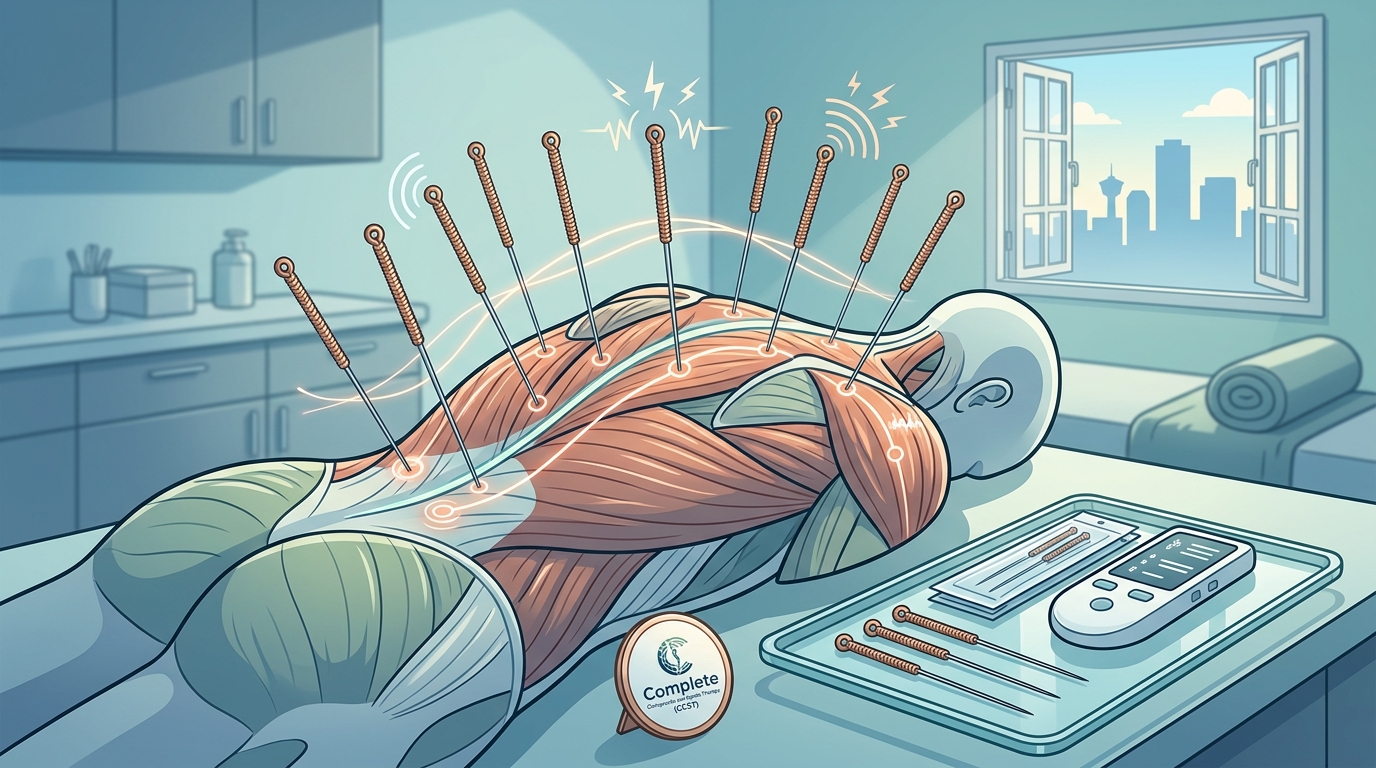
When a needle activates an acupoint, the body releases endorphins, serotonin, noradrenaline, and other natural pain-relieving chemicals. Electroacupuncture, which adds mild electrical stimulation to the needles, can further modulate inflammatory markers by reducing pro-inflammatory cytokines at the spinal cord level.
Brain Network Modulation
Neuroimaging studies show that acupuncture modulates specific brain networks involved in sensory, emotional, and cognitive processing of pain. A 2026 meta-analysis in Frontiers in Neurology confirmed that acupuncture both alleviates clinical pain symptoms and corrects abnormal brain network function associated with chronic pain states.
Anti-Inflammatory Pathways
Acupuncture does not just manage pain symptoms. Research suggests it may target the sources that drive pain, such as inflammation, partially by modulating autonomic nervous system pathways. This makes it a true neuromodulation therapy rather than a simple symptom mask.
Pain Conditions That Respond to Acupuncture
A landmark individual patient data meta-analysis covering over 20,800 patients from 39 trials found that acupuncture was superior to both sham and no-acupuncture controls for multiple chronic pain conditions. The effects persisted over time with only about a 15% decrease at one year.
| Pain Condition | Evidence Level | Notes |
|---|---|---|
| Low back pain | Strong (multiple RCTs) | One of the most common indications globally |
| Neck pain | Strong | Large effect sizes vs. sham controls |
| Headache / Migraine | Strong | Reduces frequency; 10-year cohort data shows lower ER costs |
| Shoulder pain | Strong | Highest effect sizes among musculoskeletal conditions |
| Osteoarthritis (knee) | Moderate to Strong | Statistically superior to sham and usual care |
| Post-surgical pain | Moderate | Opioid-sparing potential noted in acute care settings |
| Muscle spasms | Moderate | Electroacupuncture especially effective |
At CCST, the chiropractic team treats many of these conditions, including neck pain, headaches, low back pain, shoulder pain, and knee pain, often incorporating acupuncture as part of the treatment.
Acupuncture vs. IMS/Dry Needling
Patients often confuse acupuncture with dry needling. While both use thin needles, they differ in philosophy and application.
| Feature | Acupuncture (TCM / Medical) | IMS / Dry Needling |
|---|---|---|
| Origin | Traditional Chinese Medicine / Western medical adaptation | Western neuroanatomical model |
| Target | Acupoints along meridians or neuroanatomical points | Myofascial trigger points in shortened muscles |
| Goal | Pain relief, qi flow, systemic regulation | Release muscle tension and contracture |
| Electrical stimulation | Often combined (electroacupuncture) | Sometimes used |
Intramuscular Stimulation (IMS) is a treatment grounded in Western medical science that uses acupuncture needles to specifically target injured muscles that have contracted and become shortened. Both techniques are available at CCST and are selected based on your individual assessment. Learn more about IMS/Dry Needling at CCST.
What to Expect During an Acupuncture Session
A typical session begins with a thorough assessment by your practitioner. At CCST, acupuncture is provided by chiropractors Dr. Alim Kara, Dr. Shereen Kangarloo, and physiotherapist Geoff Gerber, all of whom hold specialized acupuncture certifications from institutions including McMaster University and the Canadian Memorial Chiropractic College.
During treatment, extremely thin needles are inserted at specific points. You may feel a mild sensation of heaviness or tingling, known as "De qi," which indicates the acupoint has been activated. Sessions often include electrical stimulation for acute pain or muscle activation issues. All acupuncture treatments at CCST are included in your appointment fee with no hidden costs.
Why Combining Acupuncture With Other Therapies Works Better
Integrative Pain Care is defined as the temporally coordinated, mechanism-guided, and evidence-based integration of multiple pain treatment interventions. Research from the International Association for the Study of Pain (IASP) shows that combining acupuncture with other therapies, such as rehabilitation training, can result in better outcomes by reducing drug dosage and improving pain relief.
This aligns perfectly with the CCST model. The "Complete" style is an all-encompassing one-on-one treatment using multiple techniques together, including Active Release Technique, Graston, rehabilitation exercises, and acupuncture, all delivered under one roof. This multi-therapy approach is designed to provide the quickest and most effective recovery possible.
Key Takeaways
- Acupuncture relieves pain through endorphin release, suppression of pain signaling in the spinal cord and brain, and anti-inflammatory pathways.
- A meta-analysis of over 20,800 patients confirmed acupuncture is superior to both sham and no-treatment controls for chronic pain.
- The most evidence-supported conditions include low back pain, neck pain, headache/migraine, shoulder pain, and osteoarthritis.
- Pain relief from acupuncture can persist for up to a year with only a small decrease in effectiveness.
- Combining acupuncture with manual therapy and rehabilitation produces better outcomes than any single treatment alone.
- Acupuncture is a low-risk, drug-free therapy that may reduce reliance on opioids and NSAIDs.
- At CCST in NW Calgary, acupuncture is part of every treatment session at no extra charge.
Frequently Asked Questions
Does acupuncture actually work for pain, or is it a placebo?
Large-scale research involving tens of thousands of patients shows acupuncture is statistically superior to both sham acupuncture and no treatment. While contextual factors play a role in any therapy, the biological mechanisms are well documented through neuroimaging and biochemical studies.
How many acupuncture sessions do I need for pain relief?
This varies by condition and severity. Some patients notice improvement after one or two sessions, while chronic conditions may require a short series. At CCST, the goal is always to achieve results in the fewest visits possible.
Is acupuncture safe?
Yes. When performed by trained, licensed practitioners, acupuncture has a very low risk profile. The needles used are sterile, single-use, and extremely thin. Serious adverse effects are rare.
What is the difference between acupuncture and dry needling?
Acupuncture targets acupoints along meridians or neuroanatomical sites for broad pain relief and systemic regulation. Dry needling targets specific trigger points in shortened muscles. Both are available at CCST and may be used together depending on your condition.
Can acupuncture help with headaches and migraines?
Yes. A review of 10 years of randomized controlled trials found that acupuncture reduces migraine symptoms and improves quality of life. Real-world data also shows lower emergency care costs for migraine patients who receive acupuncture.
Does insurance cover acupuncture in Calgary?
Many Alberta insurance plans cover acupuncture when provided by a chiropractor or physiotherapist. CCST direct bills almost every major insurance company to reduce or eliminate out-of-pocket expenses.
What does acupuncture feel like?
Most patients describe a mild sensation of heaviness, warmth, or tingling at the needle site. This feeling, called De qi, is a sign that the acupoint has been properly activated. The needles are so thin that insertion is typically painless.
Can acupuncture replace pain medication?
Acupuncture is a powerful complement to pain management and may reduce the need for medications, including opioids. However, it should be part of an integrated care plan. Always consult your healthcare provider before changing any medication regimen.
Book Your Acupuncture Appointment in Calgary NW
Ready to experience how acupuncture can help manage your pain? At Complete Chiropractic & Sports Therapy, every session is a comprehensive, one-on-one treatment with no hidden fees. Our certified practitioners combine acupuncture with advanced manual therapies to get you better, faster. Book your appointment online today or call our West Hillhurst clinic to get started.