

If you have ever wondered how inserting thin needles into your skin could relieve pain, you are not alone. Acupuncture is one of the most studied nonpharmacological therapies for pain, backed by decades of clinical research and growing global utilization. Whether you are dealing with chronic low back pain, recurring headaches, or a nagging sports injury, understanding the science behind acupuncture can help you decide if it is right for you. At Complete Chiropractic and Sports Therapy (CCST) in Calgary NW, acupuncture is integrated into a comprehensive, one-on-one treatment approach designed to get you better faster.
What Is Acupuncture?
Acupuncture is a therapeutic technique that involves the insertion of extremely thin needles through the skin at strategic points on the body called acupoints. Rooted in Traditional Chinese Medicine (TCM), the practice aims to restore the balanced flow of energy, or qi, through pathways known as meridians.
In modern clinical settings, acupuncture is understood through a Western biomedical lens as well. A 2024 clinical update published in PAIN Reports confirmed that acupuncture is supported by a large research evidence base and growing utilization worldwide. At CCST, practitioners including Dr. Alim Kara and Dr. Shereen Kangarloo hold specialized acupuncture certifications and apply both traditional and contemporary medical acupuncture techniques.
The Science Behind Acupuncture Pain Relief
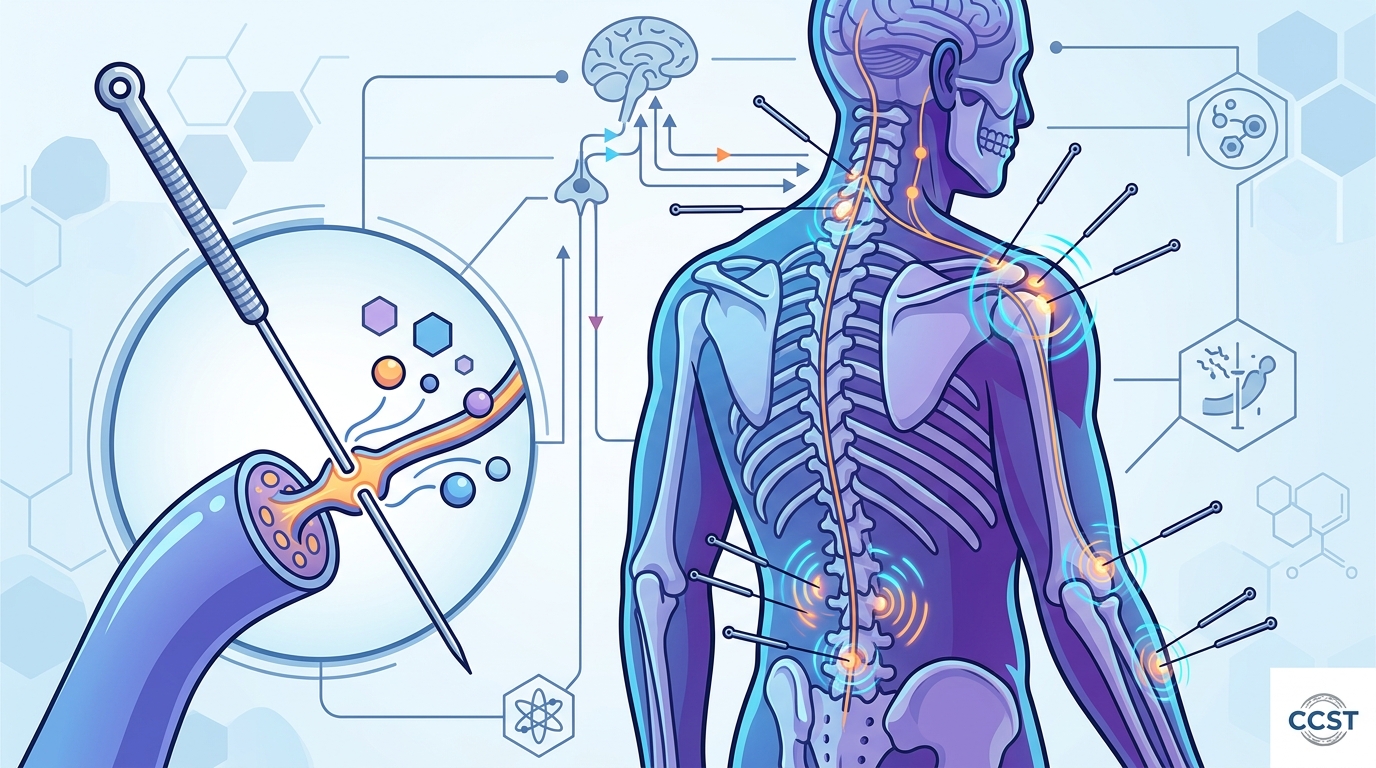
How does a thin needle reduce pain? Research has identified three primary mechanisms working together.
1. Local Tissue Response
When a needle is inserted, it creates a micro-stimulus at the acupoint. This triggers a local physiological response, including increased blood flow and the release of biochemical mediators that reduce inflammation at the site.
2. Spinal and Supraspinal Modulation
Acupuncture suppresses nociceptive (pain) signaling at both spinal and supraspinal levels. According to research in PMC, mechanisms include the peripheral and central release of endogenous opioids, your body's own natural painkillers. Electroacupuncture has also been shown to inhibit glial cell activation in the spinal cord and reduce proinflammatory cytokines.
3. Brain Network Modulation
Neuroimaging studies demonstrate that acupuncture modulates specific brain networks integral for sensory, affective, and cognitive processing. A 2026 meta-analysis published in Frontiers in Neurology confirmed that acupuncture not only alleviates clinical pain symptoms but also modulates abnormal brain network function related to altered central pain processing.
Pain Conditions Treated with Acupuncture
Acupuncture is not a one-condition therapy. The International Association for the Study of Pain (IASP) identifies the most common indications for acupuncture in chronic pain patients as low back pain, headache, arthritis, neck pain, frozen shoulder, and insomnia. At CCST, our chiropractic team treats many of these conditions using acupuncture as part of a multi-therapy approach.
A landmark 2012 individual patient data meta-analysis found that acupuncture was superior to both sham acupuncture and usual care controls across four chronic pain conditions (p < 0.001 for all comparisons). Clinical trials have also shown that pain relief from acupuncture can persist for months or even a full year following therapy.
Acupuncture vs. Other Pain Treatments
Choosing a pain management strategy can be overwhelming. The table below compares acupuncture with common alternatives.
| Factor | Acupuncture | NSAIDs | Opioids | Physiotherapy |
|---|---|---|---|---|
| Mechanism | Neuromodulation, endorphin release | COX enzyme inhibition | Opioid receptor binding | Movement restoration, strengthening |
| Invasiveness | Minimally invasive (thin needles) | Non-invasive (oral) | Non-invasive (oral) | Non-invasive |
| Risk of Dependency | None | Low | High | None |
| Common Side Effects | Minor bruising, rare | GI issues, kidney risk | Sedation, constipation, addiction | Temporary soreness |
| Long-term Relief | Months to 1 year post-treatment | Only while taking | Only while taking | Long-lasting with compliance |
| Best Combined With | Chiropractic, physiotherapy | Short-term use | Acute pain only | Acupuncture, manual therapy |
Acupuncture offers a natural approach to pain relief without the adverse effects associated with NSAIDs and opioids. Combining acupuncture with other therapies such as physiotherapy or manual therapy has been shown to produce better outcomes, including reduced drug dosage and improved pain relief.
What to Expect During an Acupuncture Session
An acupuncture session at CCST is always one-on-one. Your practitioner will assess your condition, identify the appropriate acupoints, and insert thin sterile needles. You may feel sensations of soreness, numbness, or heaviness at the acupoint. These sensations, known as De qi, indicate proper needle activation.
Sessions are typically 30 to 60 minutes. Because CCST uses a multi-technique approach, your appointment may also include IMS/dry needling, Active Release Technique, or rehabilitation exercises, all included at no extra charge.
Electroacupuncture: Enhanced Pain Relief
Electroacupuncture is a modern variation where a mild electrical current is passed between pairs of acupuncture needles. This approach can be particularly effective for treating acute pain, muscle spasms, and muscles that are not firing correctly.
Research shows that different frequencies of electrical stimulation release different types of endogenous opioid peptides. Low-frequency stimulation (2 Hz) primarily releases endomorphin, while high-frequency stimulation (100 Hz) releases dynorphin. Alternating between frequencies may produce a maximal release of multiple neuropeptides for enhanced therapeutic effects.
Key Takeaways
- Acupuncture is a well-researched, nonpharmacological therapy for managing both acute and chronic pain.
- It works through local tissue response, spinal modulation, endogenous opioid release, and brain network changes.
- Strong clinical evidence supports acupuncture for low back pain, headaches, neck pain, arthritis, and shoulder pain.
- Acupuncture has a consistently favourable safety profile with minimal side effects compared to medications.
- Combining acupuncture with chiropractic care or physiotherapy often produces better outcomes than any single treatment alone.
- Electroacupuncture can enhance pain relief by targeting specific opioid pathways through varying frequencies.
- At CCST in Calgary NW, acupuncture is part of a comprehensive, evidence-informed, one-on-one treatment plan with no hidden costs.
Frequently Asked Questions
Does acupuncture actually reduce pain or is it a placebo?
Large randomized controlled trials and meta-analyses have verified that acupuncture is superior to both sham acupuncture and usual care for chronic pain conditions. The effects are real and measurable through neuroimaging and biochemical markers.
What types of pain does acupuncture treat best?
The strongest evidence supports acupuncture for low back pain, chronic headaches, neck pain, osteoarthritis, and shoulder pain. It is also used for sports injuries, post-surgical pain, and neuropathic pain.
How many acupuncture sessions will I need?
This varies by condition and individual. Many patients notice improvement within 3 to 6 sessions. Your CCST practitioner will create an individualized care plan based on your assessment.
Is acupuncture safe?
Yes. When performed by trained, licensed practitioners, acupuncture has a consistently favourable safety profile. The most common side effect is minor bruising at the needle site.
What is the difference between acupuncture and IMS/dry needling?
Intramuscular Stimulation (IMS) is grounded in Western medical science and specifically targets injured muscles that have contracted and become shortened. Traditional acupuncture follows meridian-based point selection. Both use acupuncture needles, but the treatment rationale differs. Learn more on our IMS/dry needling page.
Does insurance cover acupuncture in Calgary?
Many Alberta health benefit plans cover acupuncture when performed by a registered chiropractor or physiotherapist. Check with your provider for specific coverage details.
Can acupuncture be combined with other treatments?
Absolutely. Research shows that combining acupuncture with therapies like physiotherapy or chiropractic care can improve pain relief and reduce the need for medication. At CCST, acupuncture is seamlessly integrated into your treatment plan.
How long do the effects of acupuncture last?
Clinical trials have shown that pain relief from acupuncture can persist for months and even up to a full year following a course of therapy. Maintenance sessions can help sustain results.
Book Your Acupuncture Appointment in Calgary NW
Ready to experience evidence-based acupuncture as part of a complete, one-on-one treatment plan? Contact CCST today to book your appointment. Our team of certified practitioners in West Hillhurst will work with you to build a personalized pain management strategy with no hidden costs.