

If you have ever wondered how a thin needle inserted into your skin could relieve chronic back pain or stubborn headaches, you are not alone. Acupuncture is one of the most researched non-pharmacological therapies for pain, and modern science now provides compelling answers about why it works. At Complete Chiropractic and Sports Therapy (CCST) in Calgary NW, acupuncture is part of a multi-technique, one-on-one treatment approach designed to get you better faster with fewer visits. This guide breaks down the science, the evidence, and what to expect during treatment.
What Is Acupuncture?
Acupuncture is a therapeutic technique that involves the insertion of extremely thin needles through the skin at strategic points on the body. Rooted in Traditional Chinese Medicine (TCM), it has been practiced for thousands of years and is now supported by a growing body of Western clinical research.
In TCM theory, acupuncture works by balancing the flow of energy, or qi, through pathways called meridians. Western medical acupuncture, sometimes called biomedical acupuncture, focuses instead on stimulating nerves, muscles, and connective tissue to produce measurable physiological changes.
At CCST, practitioners like Dr. Shereen Kangarloo and Dr. Alim Kara hold certifications in both contemporary medical acupuncture and TCM-based approaches, allowing them to tailor treatment to each patient's needs.
The Science Behind Acupuncture Pain Relief
Endorphin Release
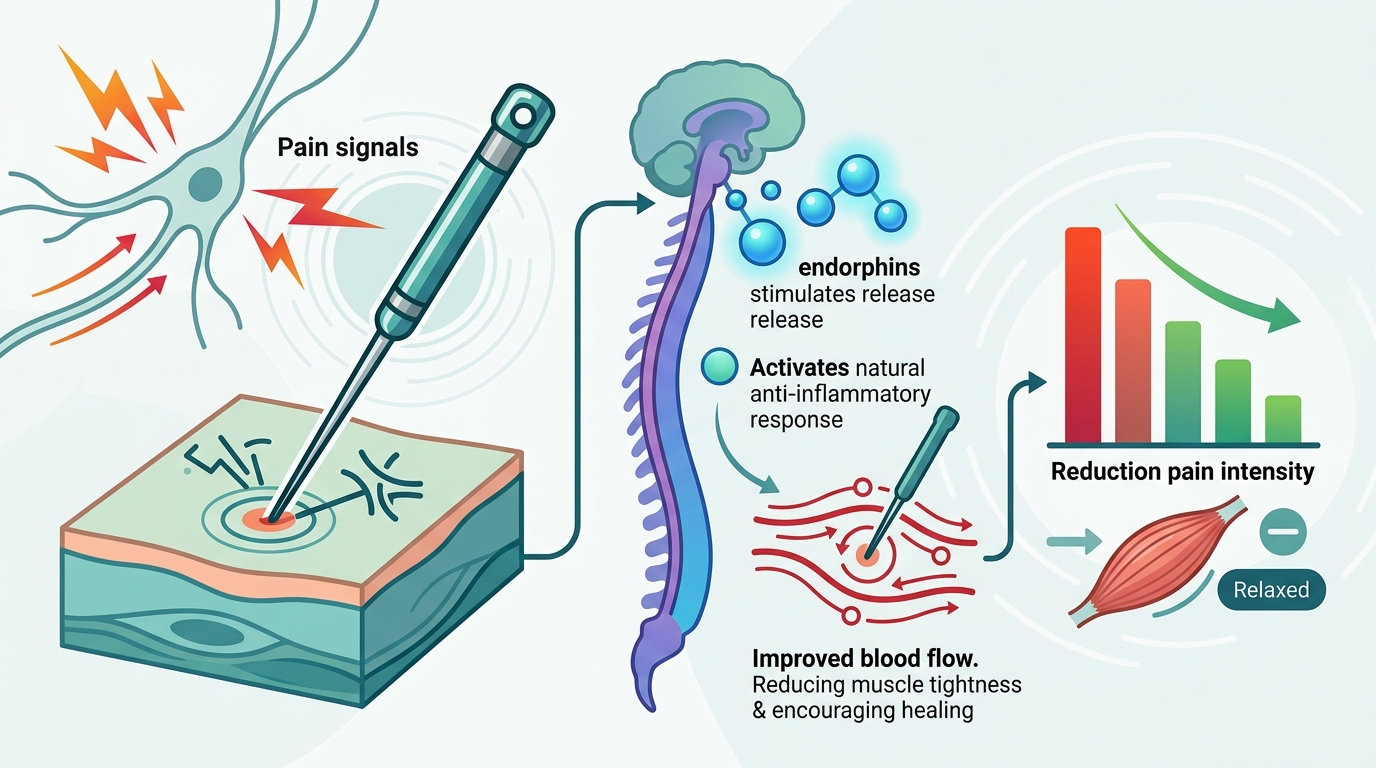
One of the best-understood mechanisms of acupuncture analgesia involves the release of endogenous opioid peptides. According to research published in Neuroscience Letters, endogenous opioid peptides in the central nervous system play an essential role in mediating the analgesic effect of electroacupuncture. Low-frequency stimulation (2 Hz) promotes the release of enkephalin and beta-endorphin, while higher frequencies (100 Hz) trigger dynorphin release. Endorphins are the body's natural painkillers, chemically similar to morphine but produced internally.
Neural Modulation
Acupuncture also modulates pain signaling at the spinal and brain levels. A 2024 review in Progress in Neurobiology (PubMed) found that mechanisms of acupuncture analgesia include suppression of nociceptive signaling at spinal and supraspinal levels, plus peripheral release of endogenous opioids and other biochemical mediators. Neuroimaging studies confirm that acupuncture modulates brain networks involved in sensory, affective, and cognitive processing of pain.
Anti-Inflammatory Effects
Beyond the nervous system, acupuncture may target the sources that drive pain, such as inflammation, by modulating autonomic pathways. This means acupuncture does not simply mask symptoms; it can address underlying inflammatory processes that sustain chronic pain conditions.
Pain Conditions Treated With Acupuncture
At CCST's acupuncture practice, treatment is often combined with electrical stimulation (electroacupuncture), which can be particularly effective for acute pain, muscle spasms, and muscle activation issues. Common conditions that respond well to acupuncture include:
- Chronic low back pain
- Neck pain and tension headaches
- Osteoarthritis (knee, hip, shoulder)
- Neuropathic pain (e.g., diabetic neuropathy)
- Sports injuries and muscle strains
- Post-surgical pain
Research confirms acupuncture's effectiveness across a broad range of both acute and chronic pain conditions, with a consistently favourable safety profile.
Acupuncture vs. IMS/Dry Needling
Patients often ask about the difference between acupuncture and dry needling. While both use similar needles, they differ in philosophy and application.
| Feature | Acupuncture | IMS/Dry Needling |
|---|---|---|
| Origin | Traditional Chinese Medicine / Western medical acupuncture | Western musculoskeletal medicine |
| Target | Meridian points or neuroanatomical sites | Contracted, shortened muscle bands |
| Primary goal | Pain relief, qi balance, systemic regulation | Release of myofascial trigger points |
| Electrical stimulation | Often combined (electroacupuncture) | Sometimes used |
| Conditions | Broad: pain, inflammation, stress, nausea | Focused: tight muscles, nerve-related pain |
Intramuscular Stimulation (IMS) is a treatment grounded in Western medical science that uses acupuncture needles to target injured muscles that have contracted and become shortened. At CCST, both techniques are available through qualified practitioners and are included at no extra charge as part of your treatment.
What to Expect During an Acupuncture Session
Your first visit at CCST begins with a thorough assessment. Your practitioner will discuss your pain history, goals, and any previous treatments. Needles are typically left in place for 15 to 30 minutes, and many patients feel a mild tingling or dull ache at the insertion site, which is a normal response.
Because CCST follows a one-on-one model, your entire session is spent with your practitioner. Treatment may also incorporate chiropractic adjustments, soft-tissue techniques, or rehabilitation exercises depending on your condition. There are never any hidden costs for these combined approaches.
What Does the Research Say?
The evidence base for acupuncture in pain management has grown substantially over the past two decades. A landmark individual patient data meta-analysis, one of the highest levels of clinical evidence, found clear effectiveness for acupuncture across multiple chronic pain conditions including back pain, neck pain, osteoarthritis, and headaches.
A 2026 meta-analysis published in Frontiers in Neurology integrated neuroimaging and clinical evidence from 17 high-quality randomized controlled trials involving 750 patients. The results confirmed that acupuncture not only alleviates clinical pain symptoms but also modulates abnormal brain network function related to altered central pain processing.
Chronic pain affects 20 to 30 percent of the global population, making safe and effective non-drug options critically important. Acupuncture offers a drug-free approach with minimal side effects, aligning well with patients seeking alternatives to long-term medication use.
Key Takeaways
- Acupuncture triggers the release of endorphins and other natural opioid peptides that reduce pain perception.
- It modulates pain signaling at the spinal cord and brain level, supported by neuroimaging evidence.
- High-quality randomized controlled trials and meta-analyses confirm its effectiveness for chronic pain.
- Electroacupuncture, which combines needles with electrical stimulation, can enhance analgesic effects.
- Acupuncture differs from IMS/dry needling in its targets, philosophy, and range of conditions treated.
- At CCST in Calgary NW, acupuncture is integrated into a comprehensive, one-on-one treatment plan at no extra charge.
- It is a safe, drug-free option for conditions like back pain, headaches, osteoarthritis, and sports injuries.
Frequently Asked Questions
Is acupuncture painful?
Most patients report minimal discomfort. The needles used are extremely thin, much finer than a standard medical needle. You may feel a mild tingling or dull sensation at the insertion site, which typically indicates the treatment is working.
How many acupuncture sessions do I need for pain relief?
This varies by condition and individual. Some patients notice improvement after one or two sessions. At CCST, the goal is always to achieve lasting results with fewer visits rather than locking you into a lengthy treatment plan.
Does acupuncture actually release endorphins?
Yes. Research dating back to the 1970s and confirmed by modern studies shows that acupuncture stimulates the release of beta-endorphin, enkephalin, endomorphin, and dynorphin, all of which are natural pain-relieving chemicals produced by the body.
Can acupuncture replace pain medication?
Acupuncture is a complementary therapy. It can reduce reliance on pain medication for many patients, but you should always work with your healthcare provider before making changes to prescribed medications.
What is the difference between acupuncture and dry needling?
Acupuncture targets meridian points or neuroanatomical sites for broad systemic effects, while dry needling specifically targets contracted muscle bands and trigger points. Both use thin needles, but their clinical goals and underlying frameworks differ.
Is acupuncture covered by insurance in Alberta?
Many Alberta health benefit plans cover acupuncture when performed by a registered chiropractor or physiotherapist. CCST direct bills almost every major insurance company to reduce or eliminate out-of-pocket costs.
Who performs acupuncture at CCST Calgary?
At CCST, acupuncture is performed by certified chiropractors and physiotherapists, including Dr. Alim Kara, Dr. Shereen Kangarloo, Dr. Alexandra Toutant, and physiotherapist Geoff Gerber. Each holds specific acupuncture certifications from recognized institutions.
Can acupuncture help with sports injuries?
Absolutely. Acupuncture is widely used in sports medicine for pain management, muscle recovery, and inflammation reduction. Combined with other techniques available at CCST such as Active Release Technique (ART) and physiotherapy, it can accelerate recovery and improve performance.
Ready to Try Acupuncture for Your Pain?
If chronic or acute pain is holding you back, acupuncture may be the drug-free solution you have been looking for. Book an acupuncture appointment at Complete Chiropractic and Sports Therapy in Calgary NW and experience a one-on-one, evidence-based approach to pain relief.