

Can Osteopathy Help With Digestive Issues?
Digestive discomfort affects millions of people globally, yet many patients do not realize that the root cause often lies outside the stomach itself. Osteopathy offers a holistic approach to treating these symptoms by focusing on the structural and functional relationships between your organs and your skeletal system. At Complete Chiropractic & Sports Therapy in NW Calgary, we utilize this manual therapy to restore mobility and reduce pain that standard medication often misses.
What Is Osteopathy?
Osteopathy is a form of manual medicine that emphasizes the physical manipulation of muscle tissue and bones. Osteopathy is a holistic healthcare discipline that focuses on the interrelationship between the body's structure and its function. Unlike conventional medicine which often treats symptoms in isolation, osteopaths look at the entire body to find the source of the problem.
In Calgary, this practice is gaining traction among patients seeking non-invasive solutions for chronic pain. The philosophy behind this treatment is that the body has an innate ability to heal itself. By removing restrictions in the joints and tissues, osteopaths help the body function more efficiently. This approach is particularly effective for digestive issues because the organs responsible for digestion are housed within the rib cage and abdomen, areas heavily influenced by spinal alignment and muscle tension.
The Gut-Brain Connection
Understanding why osteopathy works for digestive issues requires looking at the nervous system. The vagus nerve is the primary component of the parasympathetic nervous system, which controls the "rest and digest" functions of the body. When the spine is misaligned or when there is excessive tension in the diaphragm, the vagus nerve can become compressed or irritated.
According to recent medical literature, nerve compression can significantly impair digestive motility. Research indicates that vagus nerve stimulation can improve gastrointestinal motility. By using manual techniques to release tension in the thoracic spine and the diaphragm, an osteopath can help decompress this nerve. This allows the digestive system to receive the proper signals to contract and relax, reducing bloating and irregularity.
Furthermore, the diaphragm plays a crucial role in digestion. It acts as a pump that massages the liver, stomach, and intestines. If the diaphragm is restricted due to poor posture or previous injuries, it cannot perform this massage effectively. Osteopathic treatment focuses on restoring the full range of motion to the diaphragm, ensuring that blood flow and organ movement remain optimal.
Common Digestive Conditions Treated
Osteopathy is not a cure-all, but it is highly effective for specific mechanical causes of digestive distress. Patients in NW Calgary often seek treatment for the following conditions:
Acid Reflux and GERD
Gastroesophageal reflux disease (GERD) is often caused by pressure on the stomach or a hiatal hernia. Osteopaths can perform visceral manipulation to gently reposition the stomach and reduce pressure on the lower esophageal sphincter. This mechanical adjustment can significantly reduce the frequency of acid reflux episodes without the need for long-term medication.
Irritable Bowel Syndrome (IBS)
IBS is a functional disorder that causes cramping, abdominal pain, bloating, gas, and diarrhea or constipation. Because IBS is often linked to stress and physical tension in the abdominal wall, osteopathy provides a dual benefit. It addresses the physical tightness in the abdominal muscles while also calming the nervous system through parasympathetic activation.
Post-Surgical Adhesions
After abdominal surgeries, such as a C-section or gallbladder removal, scar tissue can form. This scar tissue, known as adhesions, can pull on internal organs and restrict their movement. Osteopathic visceral manipulation can help break down these adhesions and restore mobility to the affected organs, reducing chronic pain and improving digestive function.
The Osteopathic Treatment Process
When you visit Complete Chiropractic & Sports Therapy, the process begins with a thorough assessment. Dr. Mack Gregoraschuk and our team will review your medical history and perform a physical exam to identify restrictions in your spine and abdomen.
Assessment and Diagnosis
The diagnosis phase involves palpating the abdomen to check for organ mobility and tension. We also assess the thoracic spine and the pelvis, as these areas directly influence the digestive tract. A rigid thoracic spine can limit diaphragm movement, while pelvic misalignment can affect the lower bowel.
Visceral Manipulation Techniques
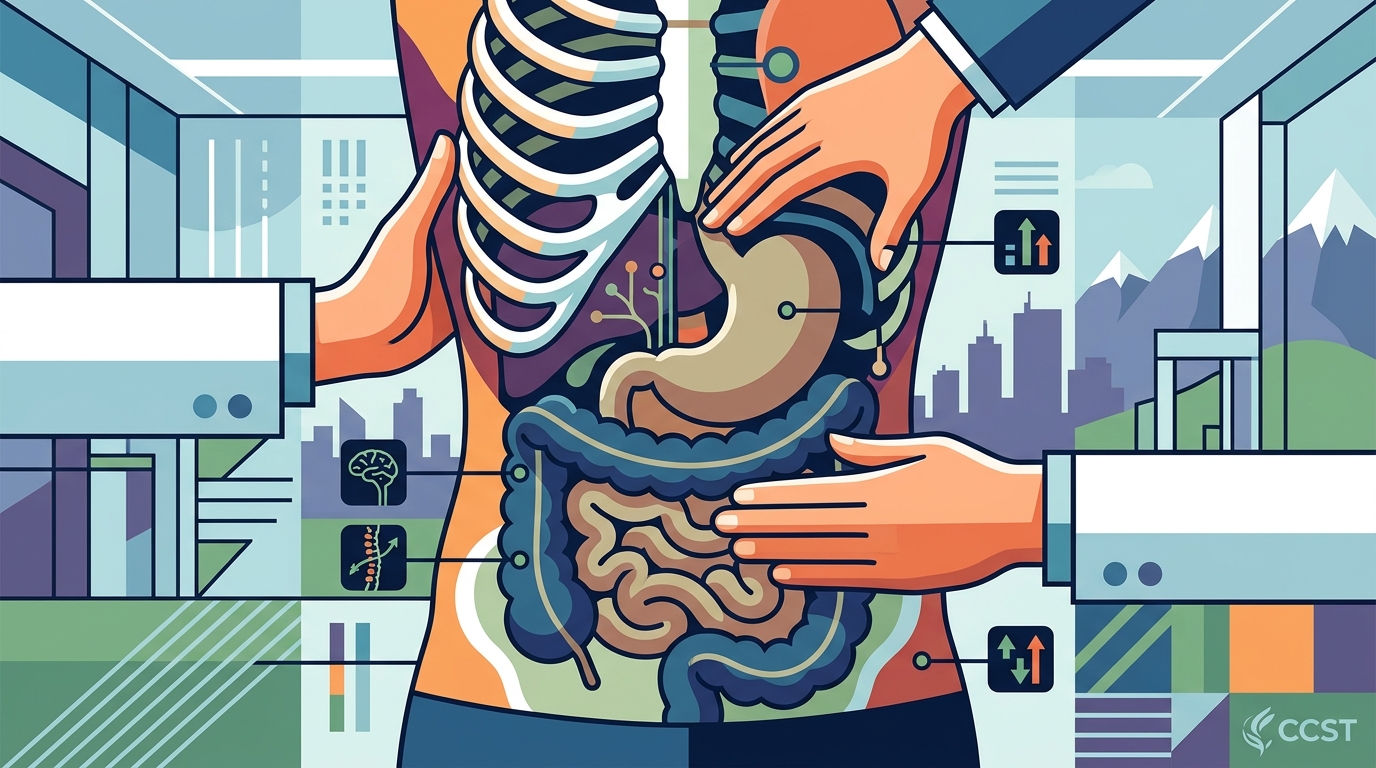
Visceral manipulation is a specialized form of osteopathy that involves gentle, specific pressure applied to the internal organs. This technique helps to release restrictions in the connective tissue surrounding the organs. It is not a forceful adjustment but rather a subtle guidance that encourages the organ to return to its natural position and mobility.
Integrated Care Approach
At CCST, we believe in a team-based approach. Osteopathy is often combined with physiotherapy and chiropractic care to provide comprehensive relief. For example, while osteopathy addresses the internal organ mobility, physiotherapy can strengthen the core muscles that support the digestive system. This multi-therapy approach ensures that patients get amazing results with fewer visits.
Osteopathy vs. Standard Care
Standard medical care for digestive issues typically involves medication to manage symptoms, such as antacids for reflux or laxatives for constipation. While these medications provide temporary relief, they do not address the underlying mechanical causes.
| Aspect | Osteopathic Care | Standard Medical Care |
|---|---|---|
| Focus | Structural and functional causes | Symptom management |
| Method | Manual therapy and manipulation | Pharmaceuticals |
| Long-term Goal | Restoring natural body function | Controlling specific symptoms |
| Side Effects | Minimal, non-invasive | Potential for drug interactions |
By addressing the root cause, osteopathy offers a sustainable solution for chronic digestive issues. Many patients report a significant reduction in symptoms after just a few sessions. This aligns with our goal at CCST to fix you in as few treatments as possible.
Key Takeaways
- Osteopathy treats digestive issues by addressing mechanical restrictions in the spine and abdomen.
- The vagus nerve plays a critical role in digestion and can be compressed by spinal misalignment.
- Visceral manipulation helps release tension in the connective tissue surrounding internal organs.
- Conditions like GERD, IBS, and post-surgical adhesions respond well to osteopathic care.
- Complete Chiropractic & Sports Therapy offers a team-based approach combining osteopathy with other therapies.
- Direct billing is available for most major insurance companies in Calgary.
- Osteopathy is a non-invasive alternative to long-term medication use.
Frequently Asked Questions
How many osteopathy sessions do I need for digestive issues?
The number of sessions varies depending on the severity of the condition. Many patients experience relief after 3 to 6 sessions. Our team at CCST will provide a personalized treatment plan during your initial assessment.
Is osteopathic manipulation painful?
No, visceral manipulation is gentle and non-invasive. You may feel some mild discomfort if there is significant tension, but it is generally a comfortable and relaxing experience.
Can osteopathy cure IBS?
Osteopathy can significantly reduce the symptoms of IBS by addressing the physical triggers. While it may not "cure" the condition in all cases, it helps manage the underlying mechanical issues that exacerbate the symptoms.
Do you accept insurance for osteopathy in Calgary?
Yes, we direct bill almost every major insurance company. This helps reduce or even eliminate out-of-pocket expenses for our patients.
What is the difference between osteopathy and chiropractic care?
While both use manual therapy, osteopathy focuses more on the soft tissues and internal organs, whereas chiropractic care primarily focuses on the spine and nervous system. We often combine both for optimal results.
Can children receive osteopathic treatment for digestive issues?
Yes, osteopathy is safe for all ages. Gentle techniques can help infants with colic or children with constipation by addressing structural imbalances.
How do I book an appointment at CCST?
You can book online through our website or call our NW Calgary clinic directly. We offer evening and weekend appointments to fit your schedule.
Book Your Consultation
If you are struggling with digestive issues, do not wait for the symptoms to worsen. Our team at Complete Chiropractic & Sports Therapy is ready to help you find relief through our unique one-on-one approach. We are committed to providing the highest care possible on every visit.
Visit our Contact Us page to schedule your appointment today. You can also learn more about our osteopathy services or explore our blog for more health tips. We look forward to helping you achieve better health.