

If you have been struggling with bloating, acid reflux, constipation, or irritable bowel syndrome (IBS), you might be surprised to learn that osteopathy can play a meaningful role in easing your symptoms. Osteopathy is a gentle form of manual therapy that uses a holistic approach to address all systems of the body, including the digestive system. Rather than focusing solely on musculoskeletal pain, osteopathic practitioners use hands-on techniques to improve organ mobility, nerve signalling, and circulation. Here is what the research says and how it works in practice at our Calgary NW clinic.
What Is Osteopathy?
Osteopathy is a manual healthcare practice that treats pain and dysfunction related to muscles, bones, tendons, ligaments, nerves, connective tissue, and internal organs. It is grounded in the principle that the body has an innate ability to heal itself when its musculoskeletal, nervous, and circulatory systems are in balance.
At Complete Chiropractic and Sports Therapy (CCST), our osteopathic practitioner addresses all layers of the body, from fascia and muscles to joints, the nervous system, and even the visceral field. Treatment is not technique-based but is rooted in an extensive understanding of anatomy and the core osteopathic principles.
The Gut-Body Connection
Your digestive system does not operate in isolation. The diaphragm, spinal column, abdominal muscles, and pelvis all play a role in gut health. When any of these structures becomes restricted or imbalanced, digestive symptoms can follow.
The Vagus Nerve
The vagus nerve is the primary nerve supply of your entire digestive tract. It exits the base of the skull, travels through the neck, and into the chest and abdomen. Compression at the cranial base or upper neck can impair its "rest and digest" function, contributing to issues like acid reflux and sluggish motility.
Stress and the Nervous System
Chronic stress shifts the body into a sympathetic (fight-or-flight) dominant state, which can disrupt peristalsis, alter stomach acid production, and affect gut-wall permeability. Osteopathy helps rebalance the autonomic nervous system, supporting healthier digestion. Complementary services like acupuncture can further support stress reduction.
Digestive Conditions Osteopathy Can Address
Visceral osteopathy is a branch of osteopathy that focuses on the manipulation and balancing of internal organs. Research and clinical experience suggest it may benefit several common conditions:
| Condition | How Osteopathy Helps |
|---|---|
| Irritable Bowel Syndrome (IBS) | Visceral manipulation reduces abdominal tension and restores autonomic balance |
| Acid Reflux / GERD | Diaphragm release and spinal alignment reduce reflux frequency |
| Constipation | Organ mobility work promotes peristalsis and reduces laxative dependence |
| Bloating and Gas | Fascial release improves lymphatic drainage and intestinal flow |
| Post-Surgical Adhesions | Gentle manipulation addresses scar tissue restricting organ movement |
Canada has one of the highest prevalences of IBS globally, with around 5 to 20 percent of the population affected. If you are dealing with chronic gut symptoms alongside musculoskeletal pain, a combined approach using osteopathy and chiropractic care may accelerate recovery.
Key Osteopathic Techniques for Digestive Health
Visceral Manipulation
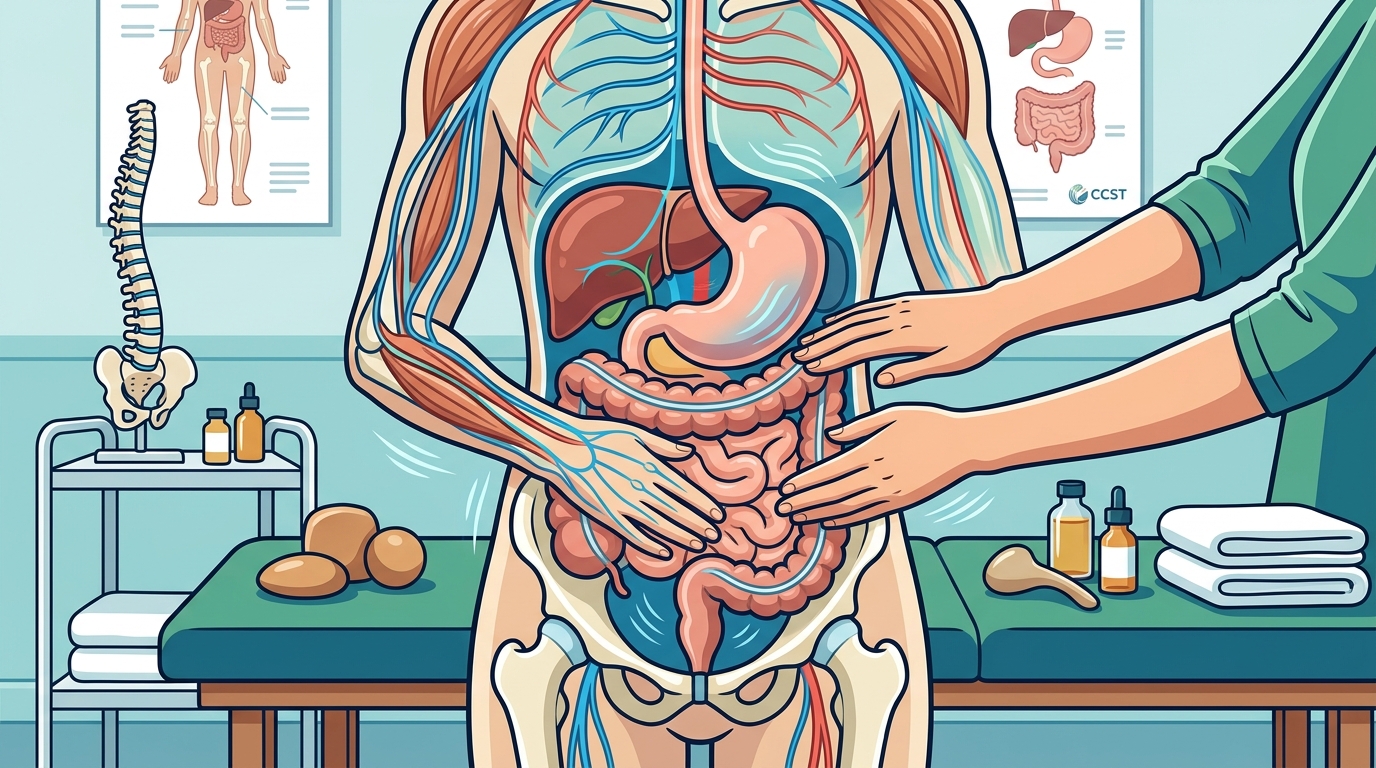
Visceral manipulation is a technique involving gentle hands-on movements of the internal organs to release tension, improve mobility, and enhance circulation. By restoring normal motion to organs like the stomach, small intestine, and colon, practitioners can help re-establish healthy digestive flow.
Myofascial Release and Spinal Work
Nerves supplying the digestive organs originate from the mid-to-lower thoracic spine (T5) down to the lumbar region (L2). Spinal restrictions at these levels can alter nerve signalling to the gut. Osteopathic spinal mobilization, combined with massage therapy, can address both the local and systemic components of digestive dysfunction.
Craniosacral Techniques
Craniosacral therapy targets the cranial base and upper cervical region to release compression on the vagus nerve. This helps calm the autonomic nervous system and supports the parasympathetic "rest and digest" response.
What the Research Says
A growing body of peer-reviewed evidence supports osteopathic manipulative treatment (OMT) for digestive complaints. A 2023 literature review published in Cureus evaluated five primary research studies and concluded that visceral OMT effectively reduces the symptoms of IBS and improves patients' quality of life.
A 2025 review in the International Journal of Osteopathic Medicine analysed 12 clinical trials with 516 participants and found that OMT and related treatments are effective interventions for improving symptoms of gastrointestinal distress like constipation and abdominal pain.
Multiple randomized controlled trials also show that OMT can reduce IBS and GERD symptoms with a favourable safety profile. These findings reinforce the value of including osteopathy in a multidisciplinary care plan.
What to Expect During a Session at CCST
When you book an osteopathy appointment at CCST, your practitioner begins with a full-body assessment using highly sensitive palpation skills. The goal is to locate the root cause of your issue rather than only treating the presenting symptoms.
Treatment may involve gentle joint manipulation, myofascial release, neuromuscular activation, and visceral manipulations. Sessions progressively unload larger lines of tension before addressing more specific areas of restriction. Changes can be felt immediately or may take three to five days to integrate.
At CCST, there are never any hidden costs. All techniques are included in the price of your treatment. If your digestive issues are connected to spinal dysfunction or chronic pain, our team can coordinate care across physiotherapy, chiropractic, and osteopathy for a truly comprehensive approach.
Key Takeaways
- Osteopathy addresses digestive issues by restoring organ mobility, nerve signalling, and autonomic balance.
- Visceral manipulation is a core technique that targets tension in the internal organs directly.
- Peer-reviewed research supports OMT for IBS, GERD, constipation, and post-surgical recovery.
- The vagus nerve and thoracolumbar spine are key treatment targets for gut-related dysfunction.
- Stress management through osteopathic care can improve the parasympathetic "rest and digest" response.
- Osteopathy works well alongside chiropractic, physiotherapy, and acupuncture for a multidisciplinary approach.
- At CCST in Calgary NW, one-on-one osteopathic sessions are designed to find and treat the root cause.
Frequently Asked Questions
Is osteopathy safe for digestive conditions?
Yes. Osteopathic manipulative treatment has a favourable safety profile according to multiple systematic reviews. Techniques used for digestive issues are gentle and non-invasive.
How many osteopathy sessions are needed for digestive improvement?
Many patients notice improvements within two to four sessions. Research on Crohn's disease patients showed reduced IBS-like symptom severity after just three sessions of osteopathy.
Can osteopathy cure IBS?
Osteopathy is not a cure for IBS, but it is considered an effective complementary therapy. Studies show it can significantly reduce symptom severity and improve quality of life when used alongside conventional management.
What digestive symptoms respond best to osteopathy?
Bloating, constipation, acid reflux, abdominal pain, and general motility issues tend to respond well. Conditions involving structural or functional restrictions are especially suited to manual treatment.
Does CCST offer osteopathy for digestive issues in Calgary?
Yes. Complete Chiropractic and Sports Therapy offers osteopathy in NW Calgary. Our practitioner, Mack Gregoraschuk, holds a Master in Practice of Osteopathic Manipulative Sciences from the Canadian Academy of Osteopathy and takes a holistic, root-cause approach to treatment.
Can I combine osteopathy with other treatments?
Absolutely. Osteopathy pairs well with chiropractic care, physiotherapy, acupuncture, and guidance from your medical doctor or naturopath. At CCST, our multidisciplinary team collaborates to provide comprehensive care under one roof.
Is osteopathy covered by insurance in Alberta?
Many extended health benefit plans in Alberta cover manual osteopathy. Check with your provider for specific coverage details, or contact our clinic for assistance.
Take the Next Step Toward Better Digestive Health
If digestive issues are affecting your quality of life, osteopathy may offer the relief you have been looking for. Book an osteopathy appointment at CCST in Calgary NW today, or call us at 403-245-2686. Our one-on-one approach means you get focused, evidence-informed care every visit.