

Chronic digestive discomfort affects millions of people globally, often leading to a cycle of pain, bloating, and reduced quality of life. Recent clinical observations suggest that structural imbalances in the spine and pelvis can significantly impact visceral function. According to the National Institute of Diabetes and Digestive and Kidney Diseases, gastrointestinal disorders are among the most common reasons for physician visits in North America, highlighting the urgent need for effective, non-pharmacological management strategies. This article explores the physiological connection between osteopathic manipulation and digestive health, specifically within the context of modern Calgary healthcare practices.
What Is Osteopathy?
Osteopathy is a form of manual medicine that focuses on the physical manipulation of muscle tissue and bones. Unlike standard massage therapy which primarily targets superficial muscle tension, osteopathic treatment delves deeper into the fascial networks and visceral structures. Osteopathy is a holistic healthcare discipline that emphasizes the interrelationship between the body's structure and its function. Practitioners use gentle, precise hands-on techniques to restore mobility and improve the flow of fluids and nerves throughout the body.
In Calgary, osteopathy is often integrated into multi-disciplinary clinics to address complex chronic conditions. At Complete Chiropractic & Sports Therapy, osteopathy is not viewed in isolation. Instead, it is part of a comprehensive diagnostic process that considers how spinal alignment, pelvic positioning, and visceral mobility interact. This approach ensures that patients receive care that addresses the root cause of their discomfort rather than just masking symptoms.
The Gut-Brain Connection
To understand how osteopathy helps digestion, one must first understand the autonomic nervous system. The gut is often referred to as the "second brain" because it contains the enteric nervous system, a vast network of neurons that governs gastrointestinal function. This system communicates directly with the central nervous system via the vagus nerve.
When the spine is misaligned, particularly in the thoracic and lumbar regions, it can create mechanical interference with nerve signals. This interference may disrupt the parasympathetic "rest and digest" response, shifting the body into a sympathetic "fight or flight" state. Chronic stress or physical trauma can exacerbate this imbalance, leading to slowed digestion, bloating, and irregular bowel movements. Research published in the Journal of Bodywork and Movement Therapies indicates that visceral manipulation can significantly improve vagal tone, thereby enhancing digestive efficiency.
Mechanisms of Action
Osteopathic practitioners utilize specific techniques to address these structural and functional disruptions. The primary goal is to restore mobility to the viscera (internal organs) and the surrounding connective tissue.
Visceral Manipulation
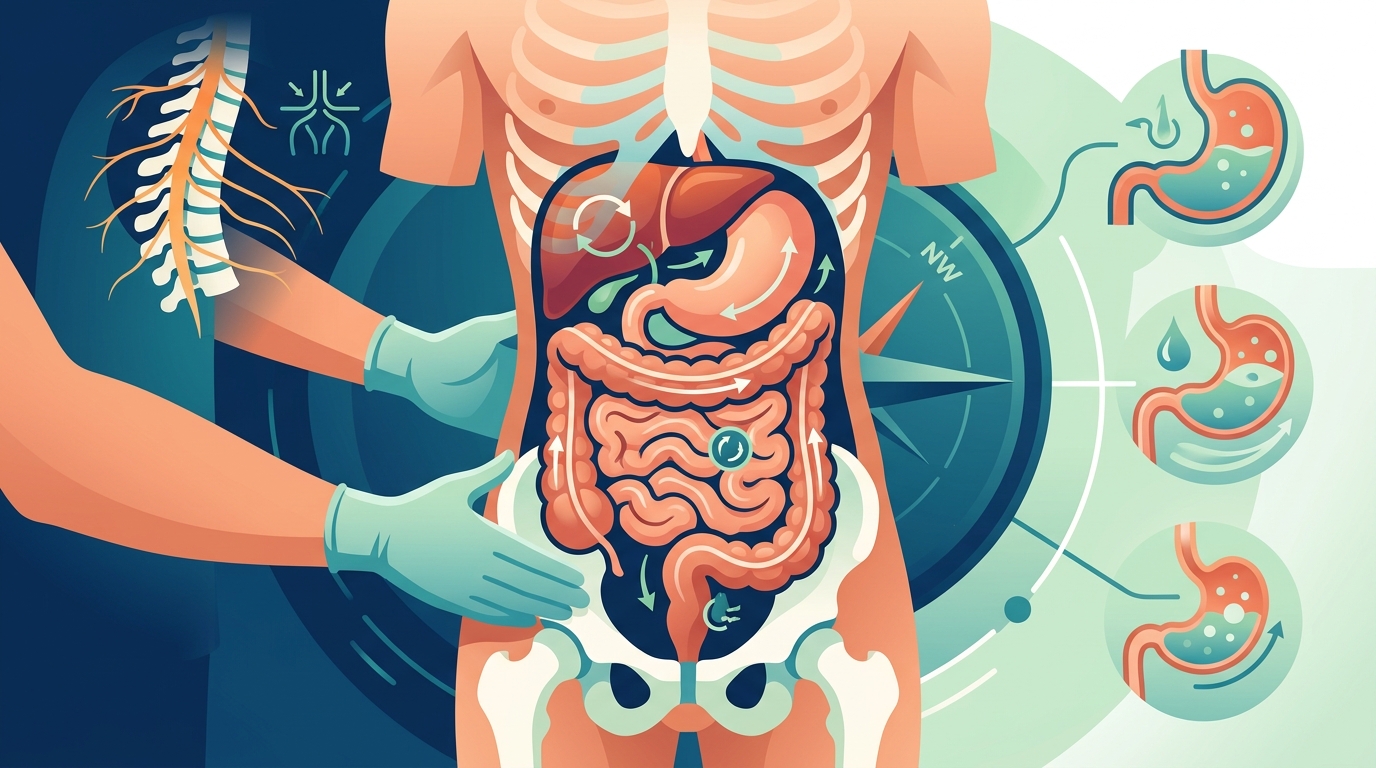
Visceral manipulation involves gentle, sustained pressure applied to the abdominal organs. Over time, adhesions or restrictions can form around the stomach, liver, intestines, and spleen due to surgery, inflammation, or poor posture. These restrictions limit the natural movement of the organs during digestion. By manually releasing these adhesions, osteopaths can improve peristalsis, which is the wave-like muscle contractions that move food through the digestive tract.
Thoracic and Lumbar Release
The nerves that supply the digestive organs originate from specific segments of the spine. For example, the stomach and upper intestines are innervated by the thoracic spine, while the lower intestines and pelvic organs are connected to the lumbar and sacral regions. Spinal misalignments can compress these nerve roots, leading to referred pain and functional impairment. Osteopathic adjustments aim to correct these vertebral dysfunctions, ensuring clear neural pathways for optimal organ function.
Pelvic Floor Integration
The pelvic floor plays a critical role in digestive health, particularly in bowel control and evacuation. Tension or weakness in the pelvic floor muscles can lead to constipation, hemorrhoids, and pelvic pain. Osteopathic treatment often includes assessment and mobilization of the pelvic floor to restore balance and coordination.
Conditions Treated
Osteopathy is increasingly recognized as a valuable adjunct therapy for various gastrointestinal disorders. While it is not a replacement for medical diagnosis, it can provide significant relief for functional digestive issues.
| Condition | Osteopathic Benefit | Typical Symptoms Addressed |
|---|---|---|
| Irritable Bowel Syndrome (IBS) | Reduces visceral hypersensitivity and improves motility. | Bloating, cramping, alternating constipation/diarrhea. |
| Acid Reflux (GERD) | Relieves tension in the diaphragm and esophageal hiatus. | Heartburn, regurgitation, chest pain. |
| Chronic Constipation | Enhances pelvic floor coordination and colonic mobility. | Infrequent bowel movements, straining. |
| Post-Surgical Adhesions | Breaks down scar tissue restricting organ movement. | Abdominal pain, digestive blockage. |
For patients in Calgary dealing with these conditions, a targeted approach is essential. CCST Blog articles frequently highlight the importance of early intervention to prevent chronic pain cycles. By addressing the structural components of digestive issues, patients often experience a reduction in reliance on medication and an improvement in overall well-being.
The CCST Team-Based Approach
At Complete Chiropractic & Sports Therapy, we believe that digestive health cannot be treated in a vacuum. Our team-based healthcare approach ensures that every patient receives a comprehensive evaluation. Our osteopath, Mack Gregoraschuk, works in conjunction with our chiropractors and physiotherapists to create a unified treatment plan.
This collaboration is particularly effective for patients who have experienced trauma, such as motor vehicle accidents. Injuries from collisions can cause significant spinal misalignment and soft tissue damage that indirectly impacts digestive function. Our Chiropractic and Physiotherapy services complement osteopathic treatment by stabilizing the spine and strengthening the core muscles that support the abdominal cavity.
We also offer Registered Massage Therapy to address myofascial restrictions in the abdominal wall, further enhancing the benefits of osteopathic manipulation. This multi-therapy approach ensures that patients receive the highest care possible on every visit.
Key Takeaways
- Osteopathy addresses structural causes: It focuses on spinal alignment and visceral mobility to improve nerve function and organ movement.
- Visceral manipulation is key: Gentle pressure on abdominal organs can release adhesions and improve peristalsis.
- Nerve pathways matter: Thoracic and lumbar spine health directly influences the autonomic nervous system's control over digestion.
- Integrated care is superior: Combining osteopathy with chiropractic and physiotherapy yields better outcomes for complex digestive issues.
- CCST offers direct billing: We direct bill almost every major insurance company to reduce out-of-pocket expenses for our patients.
- Flexible scheduling: Our clinic offers evening and weekend appointments to accommodate busy Calgary lifestyles.
- Non-invasive option: Osteopathy provides a drug-free alternative for managing chronic gastrointestinal discomfort.
Frequently Asked Questions
How many osteopathy sessions are needed for digestive issues?
The number of sessions varies depending on the severity and chronicity of the condition. Many patients experience relief after 3 to 6 sessions, but our goal at CCST is to fix you in as few treatments as possible by using a unique one-on-one approach.
Is osteopathic manipulation painful?
No, osteopathic techniques are generally gentle and non-invasive. Practitioners use sustained pressure and subtle movements to release tension. Some mild soreness may occur after treatment as the body adjusts, but severe pain is uncommon.
Can osteopathy help with acid reflux?
Yes, osteopathy can be effective for acid reflux by addressing tension in the diaphragm and the esophageal hiatus. Improving the mobility of these structures can reduce pressure on the stomach and prevent acid from rising.
Does CCST treat digestive issues caused by car accidents?
Absolutely. Motor vehicle accidents can cause significant spinal and visceral trauma. Our team specializes in MVA Treatment and integrates osteopathy to address both the structural and functional consequences of such injuries.
Is osteopathy covered by insurance?
Most major extended health insurance plans in Canada cover osteopathic treatment. CCST offers direct billing to most insurance providers, making it easy for you to access care without upfront costs.
What is the difference between osteopathy and chiropractic?
While both use manual techniques, chiropractic focuses primarily on spinal adjustments and nervous system function, whereas osteopathy takes a broader view, including visceral manipulation and pelvic floor health. At CCST, we combine both for comprehensive care.
Can I combine osteopathy with other therapies?
Yes, we encourage a multi-disciplinary approach. Combining osteopathy with Acupuncture or Shockwave Therapy can enhance pain relief and accelerate healing.
Book Your Consultation
If you are struggling with digestive issues, do not wait for the problem to worsen. Early intervention can prevent chronic pain and improve your long-term health. Contact Complete Chiropractic & Sports Therapy today to schedule an appointment with our experienced team in NW Calgary. We are committed to helping you get amazing results with fewer visits.