
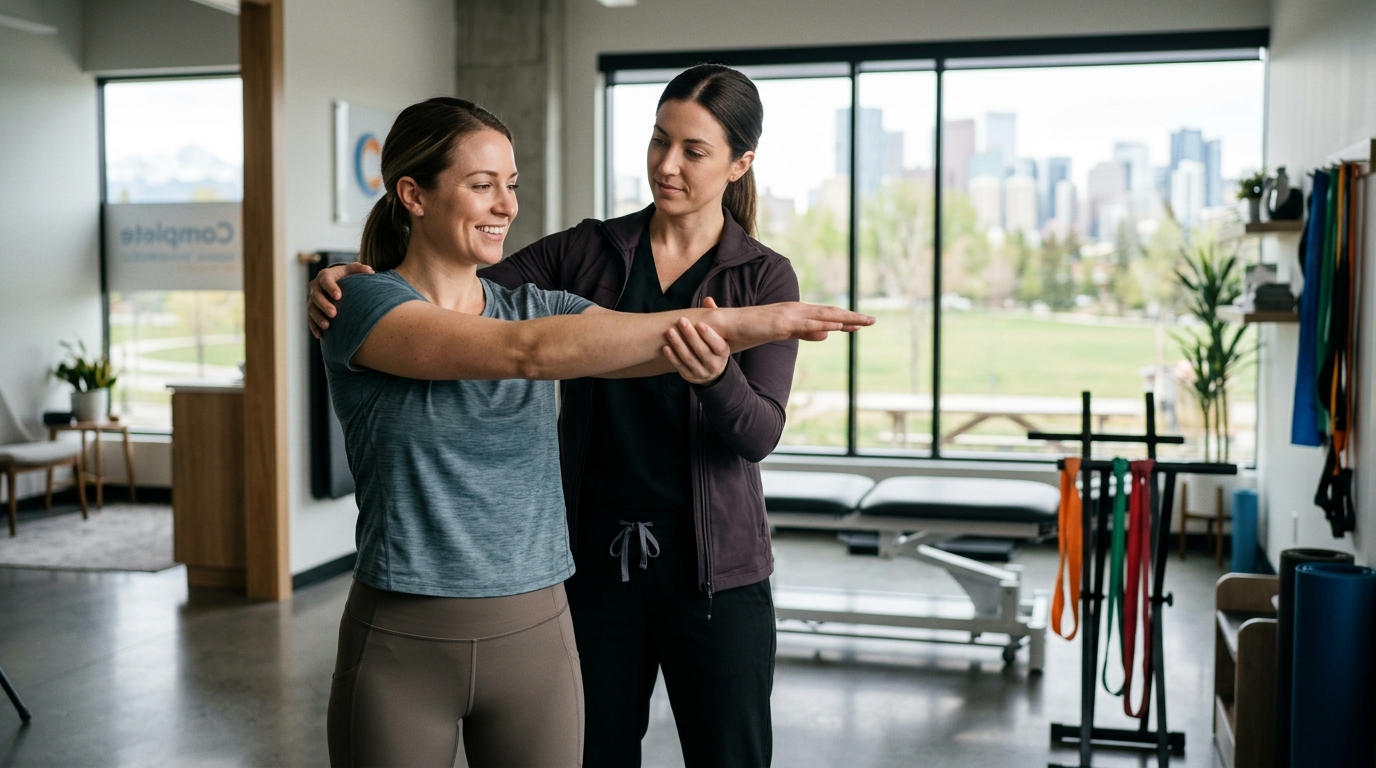
Joint stiffness directly impacts daily movement patterns and long-term musculoskeletal health. Clinical data shows that over 40 percent of adults experience restricted range of motion at least once annually. Physiotherapy addresses these limitations through targeted manual therapy and progressive loading strategies. Our team-based approach at Complete Chiropractic and Sports Therapy combines multiple modalities to restore optimal biomechanics. You can explore our comprehensive treatment pathways by visiting our services page. This structured clinical intervention prioritizes sustainable recovery while minimizing unnecessary downtime. Patients benefit from direct billing options and extended evening hours that accommodate busy schedules.
Biomechanical Mechanisms Behind Joint Restoration
Defining Articular Range of Motion
Articular range of motion is the measurable degree of movement permitted by a specific synovial joint structure. When connective tissues tighten, neural feedback loops restrict natural movement patterns. Physiotherapists systematically identify these restrictions through standardized goniometric assessments. This precise measurement establishes a baseline for tracking clinical progress.
Neuromuscular Adaptation Processes
Neuromuscular adaptation is the physiological process where motor neurons recalibrate firing rates to support increased mobility. Restricted joints often trigger protective muscle guarding. Targeted stretching and motor control exercises gradually override these protective spasms. This neurological recalibration allows smoother articulation across the entire kinetic chain.
Manual Therapy Protocols for Stiff Joints
Joint Mobilization Techniques
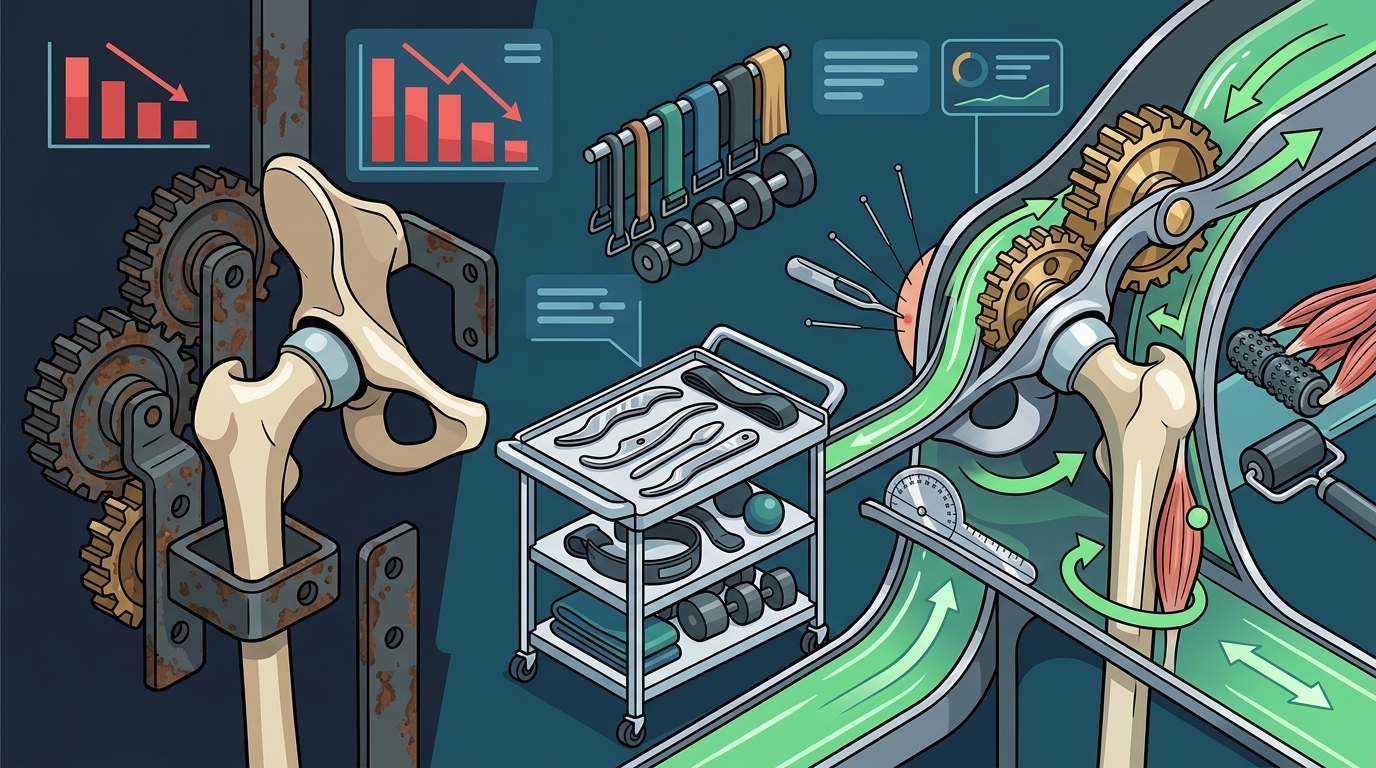
Joint mobilization is a controlled, passive movement technique applied to restricted arthritic surfaces to stimulate mechanoreceptors. Clinicians utilize graded oscillatory techniques to stimulate mechanoreceptors. This mechanical stimulation reduces local inflammation and decreases pain signaling. Patients frequently report immediate improvements in functional movement after initial sessions.
Soft Tissue Release Methods
Soft tissue release targets fascial adhesions that restrict joint excursion. Therapists apply sustained pressure to break down cross-fiber scar tissue. This mechanical disruption restores normal tissue glide and elasticity. Consistent application accelerates the restoration of full anatomical positioning.
Therapeutic Exercise Integration Strategies
Progressive Resistance Training
Progressive resistance training systematically increases load to strengthen periarticular musculature. Stronger muscles absorb impact forces that would otherwise stress the joint capsule. This structural reinforcement prevents recurrent stiffness episodes. Clinicians customize resistance parameters to match individual tolerance levels.
Dynamic Stability Drills
Dynamic stability drills train proprioceptive pathways to maintain joint alignment during complex movements. These exercises mimic real-world functional demands like climbing stairs or lifting objects. Improved neuromuscular coordination reduces compensatory movement patterns. Long-term consistency yields durable mobility gains without surgical intervention.
Advanced Modalities for Accelerated Recovery
Shockwave and Active Release Techniques
Shockwave therapy delivers focused acoustic energy to stimulate cellular regeneration. Active Release Technique specifically targets adhesions within muscle and connective tissue. Both modalities accelerate tissue remodeling when combined with standard exercises. Our clinic integrates these evidence-based tools to optimize patient outcomes. You can review our specialized protocols by visiting our about page.
Graston and Cupping Applications
Graston technique utilizes stainless steel instruments to detect and break down fibrotic tissue. Cupping therapy creates controlled suction to elevate fascial layers and improve local circulation. These adjunctive methods enhance tissue pliability and reduce recovery time. Clinicians select specific tools based on individual tissue response patterns.
Recovery Timeline Expectations
Most patients experience measurable mobility improvements within three to five clinical sessions. Chronic restrictions may require eight to twelve weeks of consistent intervention. Adherence to prescribed home exercise programs directly correlates with faster functional restoration. Our team monitors progress through repeated functional assessments to adjust treatment intensity. You can schedule your initial consultation by visiting our contact page.
Treatment Comparison Matrix
| Therapy Modality | Primary Clinical Application | Expected Patient Outcome |
|---|---|---|
| Joint Mobilization | Restores arthritic surface glide | Immediate range of motion gains |
| Active Release Technique | Breaks down fascial adhesions | Enhanced tissue elasticity |
| Progressive Resistance | Strengthens periarticular muscles | Long-term joint stabilization |
| Shockwave Therapy | Stimulates cellular regeneration | Accelerated tissue remodeling |
Key Takeaways
- Joint stiffness affects over 40 percent of adults annually according to national health surveys.
- Manual therapy directly stimulates mechanoreceptors to reduce pain signaling.
- Progressive resistance training prevents recurrent stiffness by reinforcing the joint capsule.
- Complete Chiropractic and Sports Therapy utilizes a team-based clinical model.
- Direct billing options minimize out-of-pocket expenses for most major insurance providers.
- Extended evening and weekend hours accommodate professional scheduling constraints.
- Consistent home exercise programs accelerate functional restoration timelines.
Frequently Asked Questions
How many sessions are typically required to restore full joint mobility?
Most patients achieve optimal mobility within three to twelve clinical visits depending on chronicity. Initial assessments establish baseline metrics to track weekly progress. Clinicians adjust treatment intensity based on individual tissue response rates.
Is physiotherapy painful when treating restricted joints?
Therapeutic interventions may cause temporary discomfort during initial tissue mobilization. Clinicians prioritize patient comfort and adjust pressure accordingly. Mild soreness typically resolves within 24 hours of each session.
Can manual therapy replace surgical joint replacement procedures?
Manual therapy effectively manages early to moderate joint restrictions without invasive surgery. Severe structural degradation may still require orthopedic intervention. Physiotherapists collaborate with surgeons to optimize pre and post operative outcomes.
What qualifications do your clinic therapists hold?
Our practitioners maintain active licensure and complete ongoing advanced certification courses. The team integrates chiropractic, physiotherapy, and massage therapy expertise. This multidisciplinary background ensures comprehensive patient care. You can verify our credentials by visiting our team page.
Does insurance cover joint mobility rehabilitation programs?
Most major Canadian insurance providers cover licensed physiotherapy sessions. Our clinic offers direct billing to streamline the reimbursement process. Patients should verify specific plan limits before their initial appointment.
How quickly can I return to high impact sports after treatment?
Return to activity depends on functional strength metrics and sport specific demands. Clinicians utilize sport specific drills to clear patients for full participation. Gradual loading protocols prevent re injury during the transition phase.
Next Steps
Restoring joint mobility requires a structured clinical approach tailored to your specific biomechanical needs. Our team combines manual therapy, targeted exercise, and advanced modalities to deliver measurable results. You can book your initial assessment directly through our online portal. Visit Complete Chiropractic and Sports Therapy to schedule your appointment today.